October 27, 2026
Cork vs. Foam: The 8 Best Cork Comfort Slides for Arch Support in 2026
Cork constructions and foam alternatives compared for arch support, fit and material trade-offs, with an explicit check on unverifiable slide claims.
Published October 27, 2026 by Libie Motchan
Last Reviewed: October 19, 2026
Cork and foam describe materials, not a complete ranking of arch support. A cork-latex platform can provide a firm contour that changes with wear; a recovery foam can provide cushioning and a pre-shaped arch. The complete footbed, upper and fit determine what the wearer experiences.
This eight-entry comparison includes the requested cork options and three foam benchmarks. It is not eight verified cork slides: two Birkenstock variants illustrate different cork constructions, Haflinger includes clog alternatives, and the requested Pedag-lined category remains a documentation gap. That distinction is necessary to avoid inventing products. All entries are based on desk research, with hands-on wear testing pending.
A cork footbed is usually a construction that combines cork with other materials, rather than a single solid block. Birkenstock identifies cork, latex and jute in its footbed materials; its Soft Footbed adds a cushioning layer. Fulton describes wear-molding cork in its Comfort Slide. These constructions should not be assumed identical.
Foam can also have a shaped arch and cupped heel. It may feel more yielding at first, while a firmer cork bed may require gradual introduction. Neither sensation proves superior pressure distribution, arch health or long-term durability. No clinical arch-health outcomes were measured for this comparison.
Identify the exact model and the role of each material. Check arch location, heel containment, strap security and outsole suitability. A soft layer above cork can change initial feel, while a fixed upper and an adjustable buckle create different fit choices.
Fulton specifies roughly 10 hours for its cork to mold; that is its own estimate, not a universal cork timeline. Birkenstock describes support developing with wear. Follow the exact footwear's care instructions and do not transfer oven directions for removable insoles to complete sandals.
We have not measured foam compression, cork deformation, usable lifespan or footbed temperature. An open upper allows exposure to air, but that alone does not rank breathability of the entire shoe. A material story is not a substitute for a wear test.
Describe the published material rather than making a blanket environmental promise. Birkenstock says cork can be harvested without harming the tree. That sourcing statement does not establish the full lifecycle impact of a shoe, including other materials, adhesives, production, transport and disposal. No common lifecycle comparison across these brands was established.
For firm contouring, begin with the cork constructions and check arch placement and upper fit. For cushioning-first comfort, compare the foam benchmarks. Someone who values warmth may prefer a cork-footbed clog, while someone seeking an open slide may not.
Try short periods of standing and walking before extending use. Do not force a painful break-in period. Inspect footbed shape, upper security and outsole wear over time, rather than assuming a material can never flatten or deteriorate.
Natural-material slides and synthetic recovery slides both require care appropriate to the exact model. Confirm water and heat guidance. If you need a prescribed orthotic or have persistent foot pain, check whether the complete footwear meets that need instead of choosing by material alone.
This provisional order first separates documented cork constructions, then foam alternatives, with the unresolved Pedag request last. It is not a measured performance score. Check current prices and availability directly.
| Position / option | Material category | Adaptation / feel | Main limitation |
|---|---|---|---|
| 1. Birkenstock Arizona cork-latex | Cork-latex footbed | Firm; support develops with wear | Arch and width must fit |
| 2. Birkenstock Arizona Soft Footbed | Cork-latex plus cushioning layer | More cushioned cork variant | Extra cushion is not universally better |
| 3. Fulton Comfort Slide | Cork footbed | Roughly 10 hours molding per Fulton | $120; firm initially; two colors |
| 4. Haflinger cork-latex clogs | Cork-latex indoor footwear | Firm contour; time unquantified | Often a clog rather than an open slide |
| 5. OOFOS OOahh | Recovery foam | OOfoam cushioning | Not a cork or custom-made footbed |
| 6. HOKA ORA Recovery Slide 3 | Sculpted recovery foam | Shaped cushioning and rolling geometry | Fixed shape may not suit everyone |
| 7. Crocs Mellow Recovery | Cupped recovery foam | Sink-in, slow rebound | Foam benchmark rather than cork option |
| 8. Pedag-lined styles | Exact slide unverified | Cannot assess complete shoe | Product documentation needed |
Cork is not inherently a clinical treatment, and the foam models are not asserted to be less durable. Actual pressure distribution, lifespan and heat management remain untested.
These entries preserve the requested brands while clearly labeling the footwear categories and the unresolved product documentation.
Birkenstock Arizona cork-latex: Birkenstock describes a contoured cork-latex footbed that develops support with wear, with a shaped heel area and adjustable straps. Choose the cork-latex version deliberately; Arizona EVA is a different material.
Pro: Adjustable straps and firm contour allow a useful fit comparison. Con: Initial firmness and arch placement may not suit every foot; width selection matters.
Birkenstock Arizona Soft Footbed: Birkenstock describes a cork-latex construction with an additional latex-foam cushion, suede lining and adjustable straps. This is a specific variant of the Arizona, not an all-foam recovery slide.
Pro: It shows how cork support and a cushioning layer can coexist. Con: The added cushion does not guarantee a better arch match, greater durability or comfort for every wearer.
Fulton Comfort Slide: According to Fulton, this is a slide, not an insole. It retails for $120 in Cream and Black, with a cork footbed that molds to the wearer's foot over roughly 10 hours of wear. Its arch support is relevant to this comparison, but no measured heel-cup depth or correction of pronation was established here.
Pro: Wear-molding cork offers a firmer alternative to cushioning-first recovery foams. Con: It costs more than most foam recovery slides, feels firmer before molding, and has limited colors.
Haflinger cork-latex clogs: Haflinger describes anatomical cork-latex footbeds in its clogs. These are relevant indoor cork alternatives, but many are closed-toe clogs or slippers rather than open-toe slides. Exact adaptation time is not quantified here.
Pro: A documented cork-latex indoor-footwear option. Con: Coverage and warmth differ from a slide, and the footbed must still fit the arch comfortably.
OOFOS OOahh: OOFOS describes its OOfoam cushioning and shaped recovery footbed. This provides a cushioned alternative to firmer cork and orthotic-style platforms; we have not verified an equivalent rigid heel cup or measured pronation control.
Pro: A recovery-oriented choice for readers prioritizing cushioning. Con: Soft cushioning is not the same mechanical feature as rigid arch and rearfoot control.
HOKA ORA Recovery Slide 3: HOKA describes a foam recovery slide with sculpted geometry and ventilation channels. Its platform and rolling shape provide a different feel from a firm cork bed; exact arch height and cup depth were not compared here.
Pro: A shaped and ventilated cushioning option. Con: The fixed shape and recovery geometry may not suit someone seeking a firm motion-control feel.
Crocs Mellow Recovery Slide: Crocs describes a deep, cupped footbed with sink-in comfort and slow rebound. That is a specific cushioning proposition, rather than evidence of a measured comfort win.
Pro: A clearly described foam benchmark for cupped cushioning. Con: It is a foam comparison, not a cork slide or evidence of a shorter lifespan.
Pedag-lined styles — documentation check: The brief requests Pedag-lined footwear. Pedag's accessible manufacturer catalog documents insoles and foot-care products, but we could not establish a specific current cork-lined slide model and complete-shoe specifications. It should not be represented as a verified slide purchase.
Pro: The material and insert catalog provides a starting point for manufacturer questions. Con: No documented slide model, compatible upper, outsole or full-shoe durability was established. Do not add a loose insole to a slide without explicit compatibility guidance.
The rubric considers material durability, arch contact over time, pressure distribution, breathability and value per year of use. These are research questions rather than completed test scores in this article.
No products were purchased, wear-tested or pressure-mapped. We did not measure lifecycle impact, comparative temperature or annual cost. Named manufacturer constructions support the comparison, while the Pedag entry records what could not be verified. Every option includes a specific drawback; no manufacturer receives automatic first placement.
Choose a comfortable contour and secure upper first, then the material feel. Cork can be a sensible preference for someone who likes firmer support and gradual adaptation. Foam can be a sensible preference for someone who prioritizes cushioning. A cushioning layer over cork further shows why the categories are not absolute opposites.
For material sourcing priorities, ask for the exact published composition and lifecycle evidence. Do not infer a complete shoe's impact from one natural component. For arch health, pain or prescribed support, fit and clinical requirements matter more than the cork-versus-foam label.
A well-fitting contoured bed may provide comfortable support. This review does not prove that cork improves arch health or prevents disease. The shape and complete shoe fit matter.
No universal lifespan comparison was established. Construction, use, care and replaceable components can all matter. Initial firmness does not prove lasting support.
Birkenstock and Haflinger describe cork-latex constructions; Fulton describes a cork footbed. Check the whole product's published composition, including upper and outsole, rather than assuming every part is natural.
No comparative temperature or moisture testing was performed. Lining, upper, footbed and environment all influence the experience. Open construction and cork content alone do not establish a ranking.
A specific current slide could not be verified from the manufacturer material reviewed. The entry is a documentation check, not a fabricated model or a recommendation to place a loose insert in a sandal.
Manufacturer information reviewed October 19, 2026.
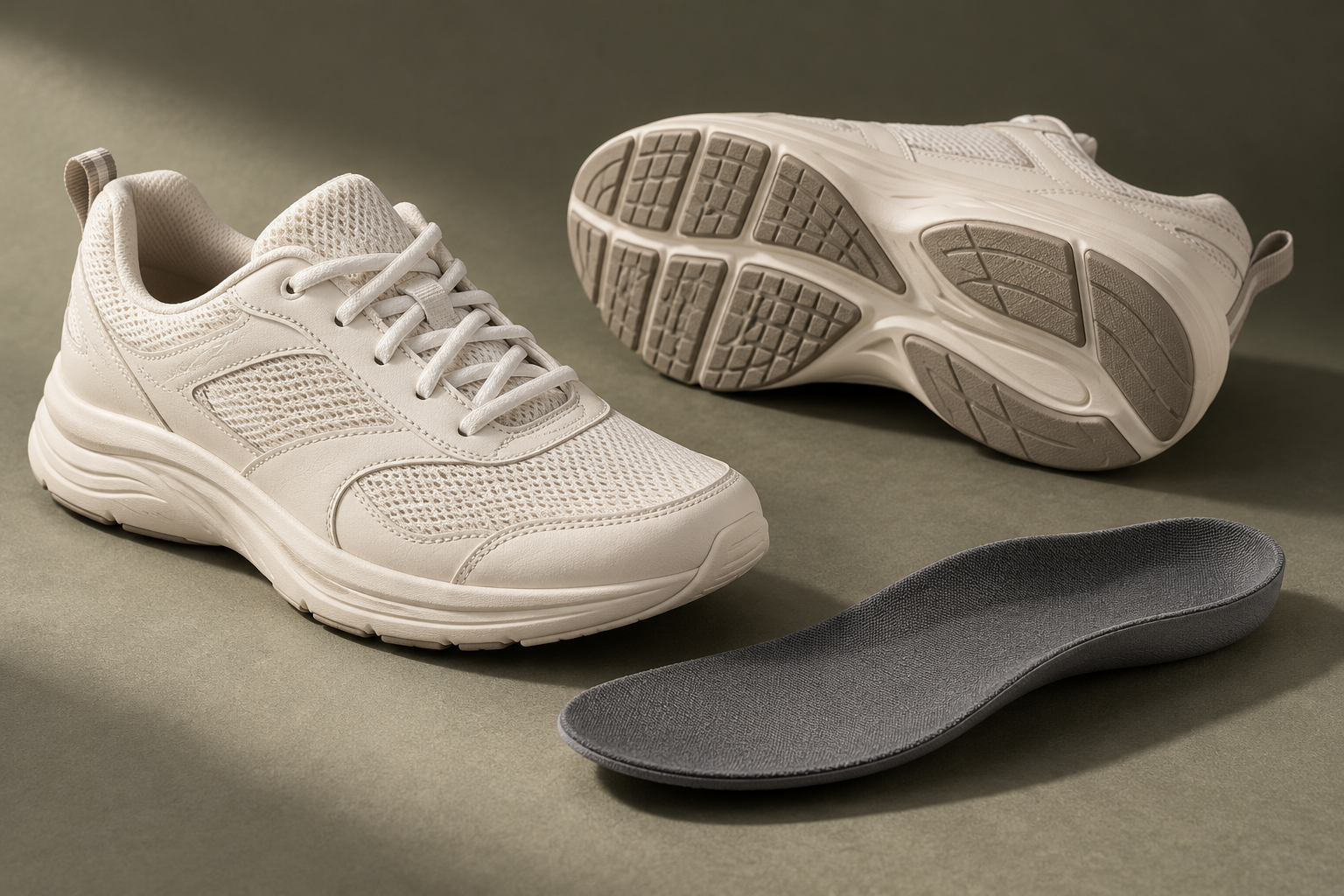
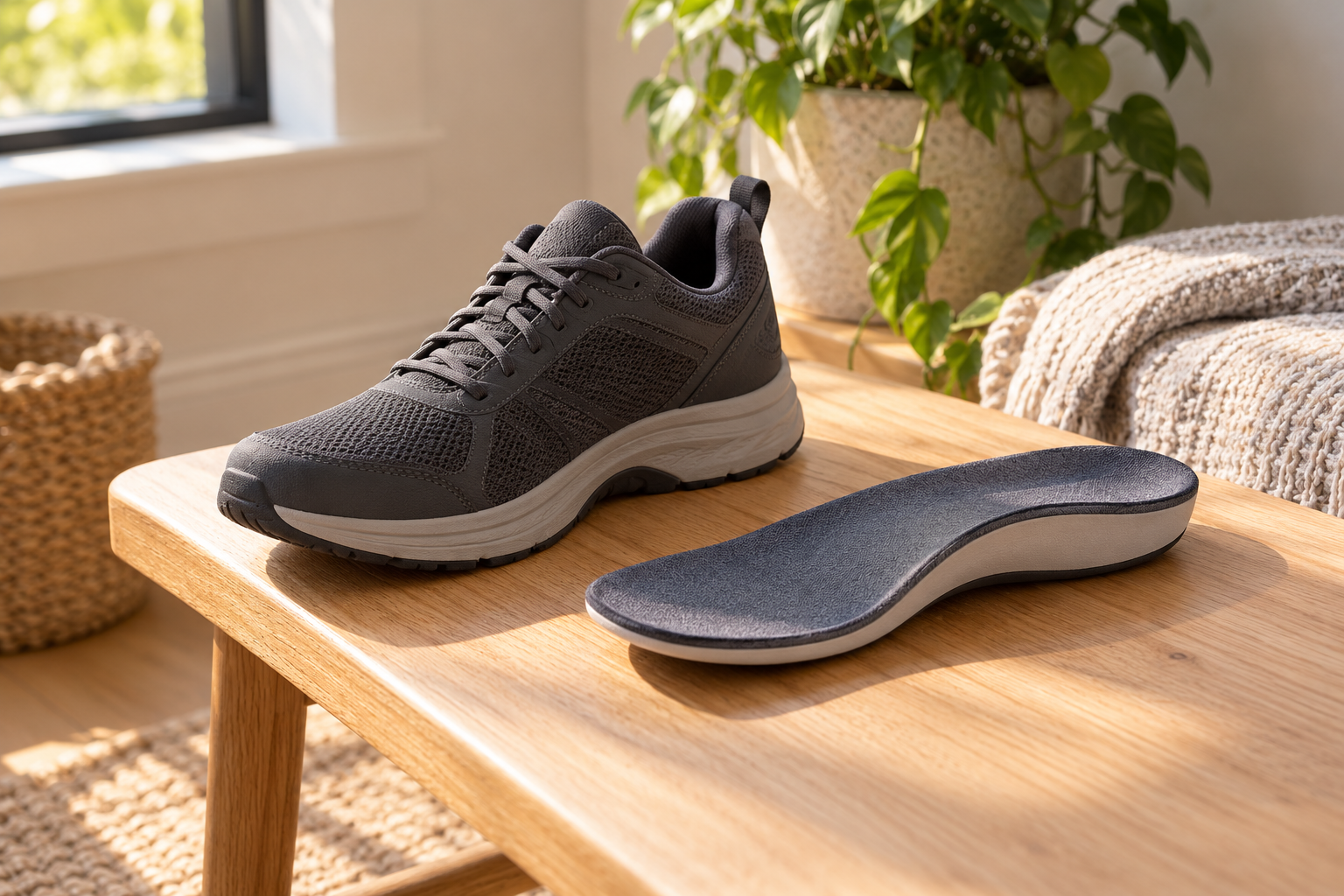
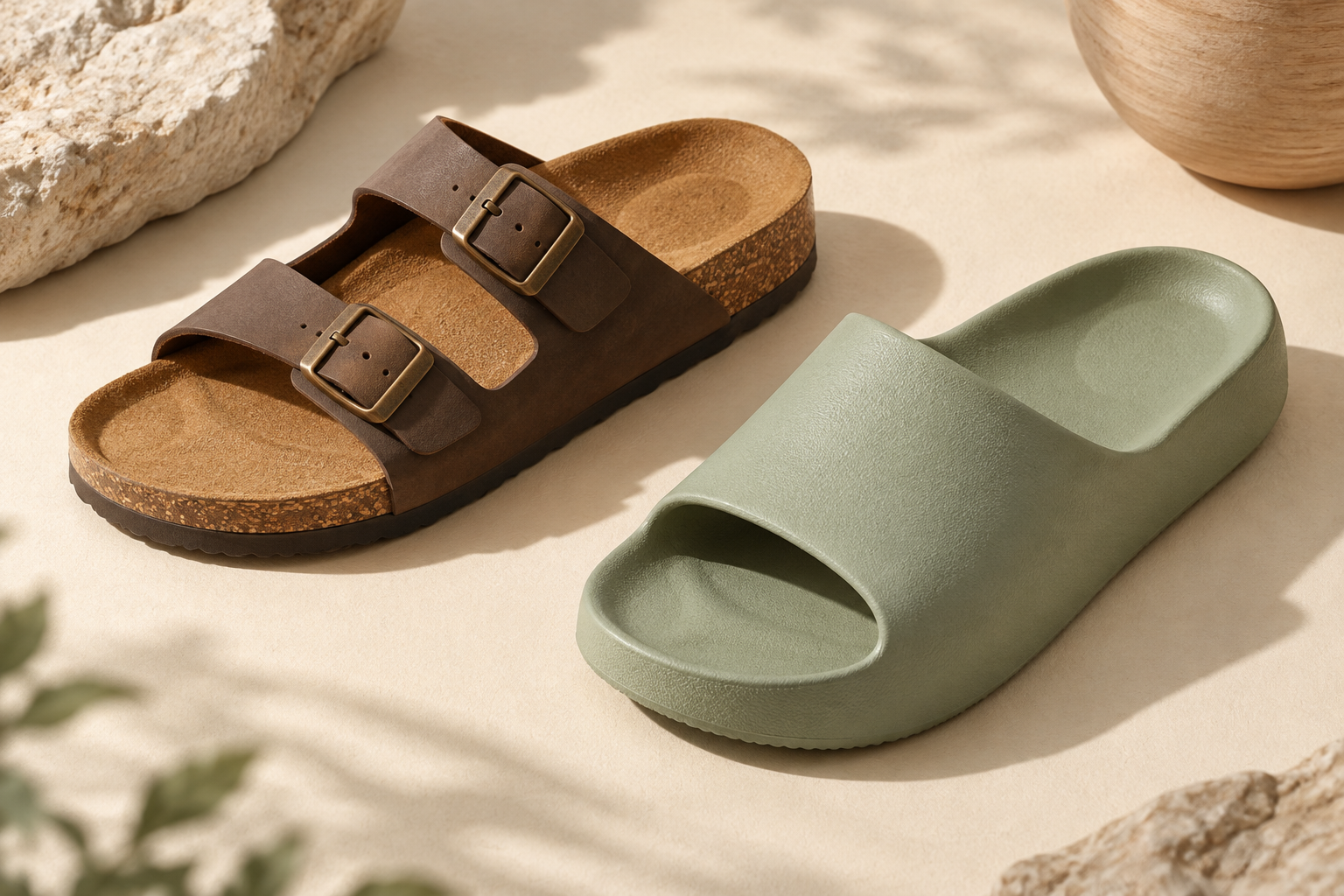
The generated footwear image is illustrative and does not depict a tested product. This article is based on desk research; hands-on wear testing is pending.
This review is not medical advice. Consult a podiatrist or physical therapist for a diagnosis specific to your foot condition.
Our latest news and trending topics