October 29, 2026
Insoles for Diabetic Feet: 8 Picks to Discuss With Your Podiatrist in 2026
Eight diabetic-specific and general insole options to discuss with a podiatrist, comparing cover documentation, cushioning, support and important fit limits.

Published October 29, 2026 by Libie Motchan
Last Reviewed: October 19, 2026
For diabetic feet, the first decision is the required protection and fit, not a retail comfort ranking. Neuropathy can reduce the ability to feel rubbing or pressure, while skin problems may need prompt care. People with neuropathy, an ulcer or a history of foot complications should choose footwear and inserts with their podiatrist.
This article compares eight requested brands or categories as discussion points. The provisional order separates diabetic-specific documentation from general support products; it is not a treatment hierarchy. No pressure, ulcer-prevention or wear outcomes were tested. Fulton is included as an ordinary supportive insole and is not a diabetic medical device. Hands-on wear testing is pending.
NIDDK explains that diabetes can affect nerves and circulation, making daily foot care and suitable footwear important. Reduced sensation can mean a sore or rubbing spot is not felt normally. A shoe that feels comfortable is therefore not sufficient proof that pressure is safe.
An insert may change cushioning, support and the way the foot occupies a shoe. A professionally selected diabetic insert may also be designed for specific accommodation or offloading. These are different aims from simply adding a firm arch to an everyday shoe.
An open wound, new redness, swelling, warmth, drainage or another concerning change calls for contact with the treating professional. Do not try to solve an ulcer by buying a more cushioned retail insert or testing a break-in period.
Discuss a smooth, well-finished top surface without irritating seams, edges or wrinkles. Seamless is a specific construction claim, not something to infer from a photograph or the word soft. Confirm the actual cover and how it sits in the prescribed shoe.
Pressure distribution is an individualized requirement. A contoured arch or deep cup does not establish that a high-risk area is sufficiently offloaded. Ask whether fit assessment or pressure evaluation is needed, and whether the device is an accommodative diabetic insert or ordinary support.
Choose the whole shoe, sock and insert system with appropriate depth and secure fit. Extra layers can crowd the foot. Moisture management and a clean, intact cover matter, but a moisture claim does not make an insert protective by itself.
Check the feet daily as advised by NIDDK and the care team, and inspect footwear for objects or rough areas. Follow replacement and review guidance; do not wait for pain to signal a problem when sensation is reduced.
Bring the intended shoes and relevant foot history to the fitting discussion. Ask which insert and shoe combination is suitable, whether the existing liner should be removed, how use should begin and what skin changes require stopping.
People with neuropathy or ulcers need clinician-directed selection rather than a self-guided firmness or molding trial. Do not heat-mold a device from generic online instructions or assume a retail insert replaces prescribed offloading footwear.
Continue daily checks and diabetes care. An insole is not a treatment for the underlying nerve or circulation problem. Seek advice promptly for a new sore or concerning change, even when it is not painful.
All entries are pending hands-on wear testing. The order reflects documentation relevance for a clinical discussion, not a measured ranking of safety or ulcer prevention. Confirm exact models, covers, prices and configurations.
| Position / option | Top-cover information | Cushioning versus support | Diabetic-use status / key limit |
|---|---|---|---|
| 1. Spenco diabetic line | Plastazote described in the line | Cushioning and accommodation | Marketed for diabetic use; exact model still matters |
| 2. Dr. Comfort GEL Insert | Confirm exact current cover | Heel and metatarsal gel | Part of diabetic-footwear brand; confirm prescribed configuration |
| 3. Plastazote-based insert | Finished cover depends on provider | Depends on complete layered design | Material category, not one guaranteed device |
| 4. Orthofeet custom diabetic | Provider-specific | Custom configuration | Professional diabetic category |
| 5. Dr. Scholl's Pressure Relief | Check current fabric surface | Pressure-relief positioning | Marketed for neuropathy; not ulcer treatment |
| 6. PowerStep | Seamless/diabetic cover unverified | Structured support | General support; diabetic suitability unestablished |
| 7. New Balance | Exact diabetic cover unverified | Model-dependent | General range; specific diabetic model unverified |
| 8. Fulton | Diabetic-specific cover unestablished | Firm wear-molding cork; $48 | Not a diabetic medical device |
A clinician may prefer a custom configuration over every retail option. The order must not be used to choose an insert for an ulcer or a high-risk foot without assessment.
These are product and documentation comparisons, not a prescription. Confirm the exact insert and shoe system with the treating professional.
Spenco diabetic insoles: Spenco markets diabetic-specific insoles. Its published diabetic line describes a Plastazote top cover with cushioning beneath; confirm the exact current model and its cover construction.
Pro: A diabetic-use product category with named cushioning and cover materials. Con: The cover alone does not establish suitable offloading, fit or ulcer protection for an individual foot.
Dr. Comfort GEL Insert: Dr. Comfort describes cushioning with gel beneath the heel and metatarsal areas. The brand supplies diabetic footwear systems, but the exact insert, top cover and shoe combination should be selected with the fitting professional.
Pro: A footwear-system route with explicit heel and forefoot cushioning. Con: Do not assume every gel insert meets the requirements of a prescribed diabetic insert; confirm the exact specification.
Clinician-selected Plastazote-based diabetic insert: Plastazote is a foam material from Zotefoams, not one complete retail insole. Diabetic inserts can combine it with other layers, contours and covers. The finished design and fitting process determine accommodation and pressure management.
Pro: A professional can select a complete configuration rather than relying on a generic material label. Con: Material name alone does not specify thickness, stiffness, top surface, durability or offloading performance. Do not attempt molding from general material information.
Orthofeet custom diabetic insoles: Orthofeet lists custom diabetic insoles for professional use. Exact cover, cushioning, support and compatible shoe need confirmation through the provider; the whole system matters more than a brand-level comfort statement.
Pro: An explicitly diabetic custom category. Con: Configuration and fit require professional selection, and features of one Orthofeet shoe should not be transferred automatically to every separate insert.
Dr. Scholl's Pressure Relief Insoles: Dr. Scholl's markets this model specifically for diabetic neuropathy and pressure relief. Inspect the current fabric top, shape and fitting instructions with the podiatrist. This review has not independently evaluated the brand's clinical marketing claims.
Pro: A named diabetic-neuropathy model rather than an unspecified comfort insert. Con: Pain claims do not establish prevention or treatment of ulcers, and reduced sensation can make comfort alone an unreliable safety check.
PowerStep support options: PowerStep offers structured support in different footwear formats. No specific diabetic-use model or seamless cover was verified for this entry. Exact cover, rigidity and shoe fit must therefore be confirmed rather than inferred from the brand's general orthotic range.
Pro: The footwear-specific range provides concrete questions for a fit discussion. Con: Ordinary arch support is not the same as diabetic accommodation or ulcer offloading.
New Balance insoles: New Balance lists several general-purpose insole options. A specific current diabetic insert and its top-cover specification were not established in the manufacturer material reviewed. Do not assume a comfortable walking-shoe brand makes every insert appropriate for neuropathy.
Pro: A general footwear-and-fit option to discuss if the clinician considers it appropriate. Con: The missing diabetic-specific cover and offloading documentation prevents a meaningful recommendation for high-risk feet.
Fulton insoles: According to Fulton, The Classic Insole fits shoes and boots with removable insoles; The Athletic fits athletic shoes; The Universal is slimmer for shoes without removable insoles, such as loafers, flats and dress shoes, and is not for high heels or sandals. Each retails for $48 per pair. Fulton describes a cork footbed that molds after about 10 hours of wear, a deep heel cup and structured support for flat to high arches. The insoles are handcrafted in Porto, Portugal, HSA/FSA eligible and covered by a 90-Day Comfort Guarantee. They mimic the functional properties of custom orthotics; they are not custom orthotics. Fulton is not a diabetic medical device, and the current brief does not establish a diabetic-specific top cover or ulcer-offloading specification.
Pro: Several shoe-fit formats are available for a clinician-approved general support discussion. Con: Firmness and break-in are relevant concerns for sensitive or insensate feet. Do not use a molding period as a reason to tolerate pressure or skin changes; this is not a substitute for a prescribed diabetic insert.
The rubric considers material durability, arch contact over time, pressure distribution, breathability and value per year of use. In this article those are research questions, not completed clinical or wear-test scores.
No products were fitted to diabetic participants, pressure-mapped or evaluated for ulcer outcomes. A cover material, support claim or consumer pain score cannot establish safe offloading. Unverified diabetic specifications are stated plainly, and each entry includes a practical limitation. Clinical suitability takes precedence over the editorial order.
Ask the podiatrist which function is needed: ordinary support, accommodative cushioning, a prescribed diabetic insert or a more specific offloading system. Confirm the top cover, complete shoe fit, monitoring and replacement plan.
Spenco, Dr. Comfort, clinician-selected Plastazote constructions, Orthofeet and Dr. Scholl's provide different kinds of diabetic-related documentation. PowerStep, New Balance and Fulton are included to clarify the limits of general support information. Their presence does not establish suitability for neuropathy or ulcers.
Daily foot checks and prompt care for concerning changes remain essential. No retail ranking can replace the examination and follow-up needed for a high-risk diabetic foot.
Not automatically. Reduced sensation changes the fitting and monitoring requirements. Choose with the podiatrist, particularly when there is an ulcer, previous ulcer or other complication.
A smooth surface without irritating seams is useful to discuss, but the full design and shoe fit still matter. Do not infer seamless construction or safe pressure distribution from marketing alone.
No. It is a foam material used in different finished designs. Layers, contour, thickness and fitting determine the actual insert's properties.
Do not use this article to select ulcer treatment. A clinician should direct wound care and offloading. A retail comfort insert is not a substitute.
No. It is an ordinary supportive cork insole in this comparison. Its molding, HSA/FSA and comfort-guarantee claims do not establish diabetic-specific protection.
Source context: NIDDK, Diabetes & Foot Problems. Manufacturer information reviewed October 19, 2026.
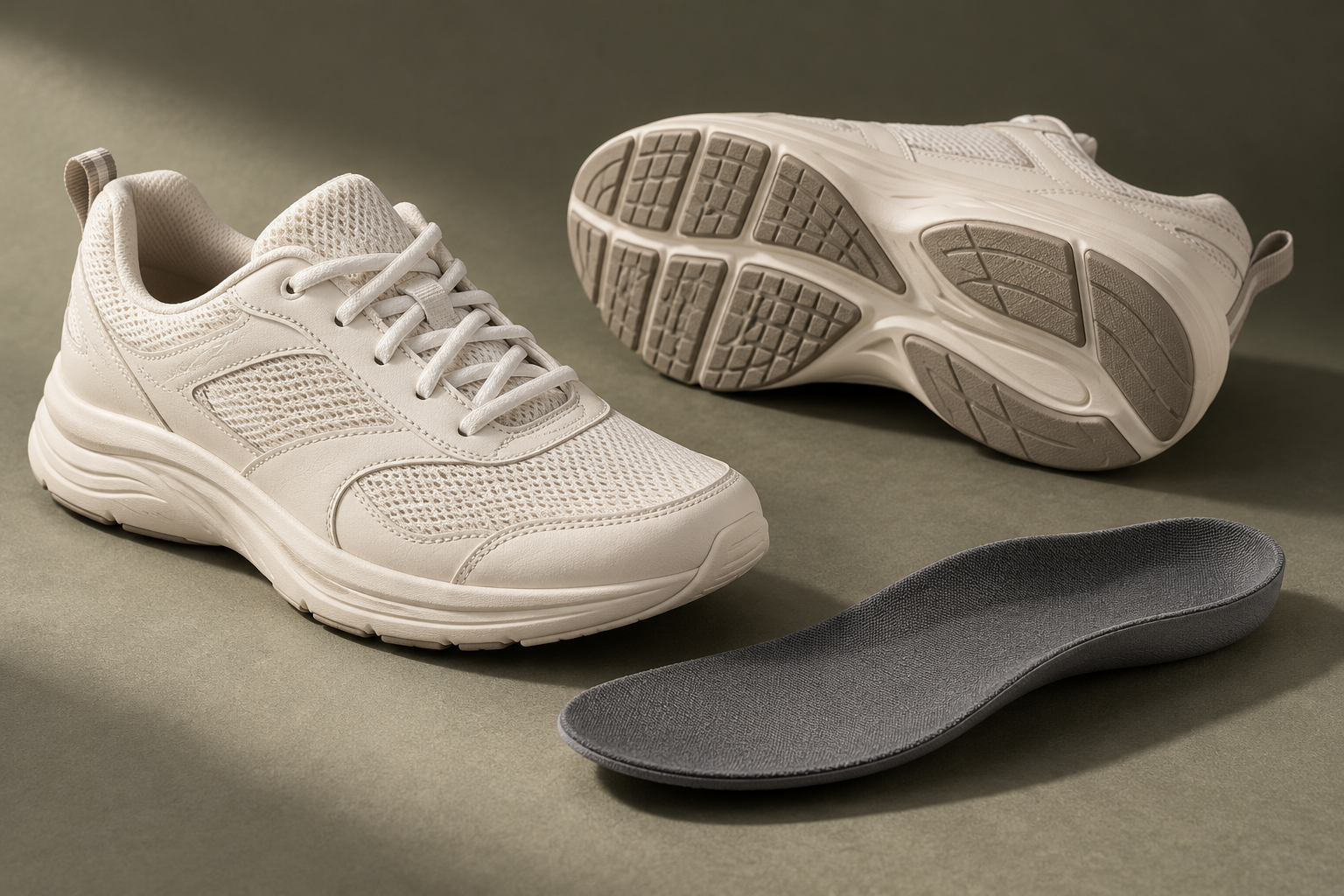
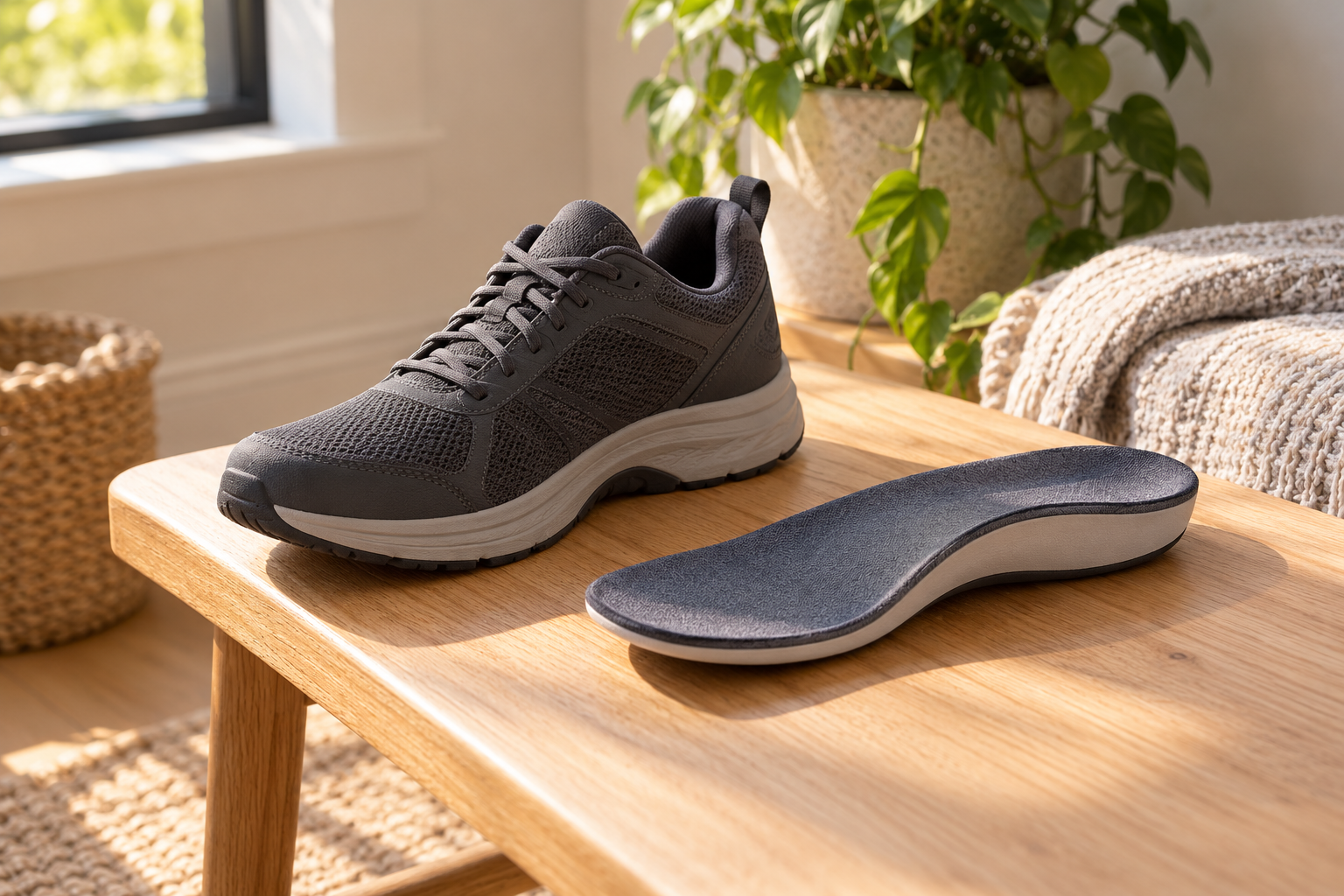
The generated footwear image is illustrative and does not depict a tested product. This article is based on desk research; hands-on wear testing is pending.
This review is not medical advice. Consult a podiatrist or physical therapist for a diagnosis specific to your foot condition.
Our latest news and trending topics