October 19, 2026
Stiff Big Toe? 8 Insoles for Hallux Limitus, Ranked for Support in 2026
A manufacturer-based comparison of eight insole and orthotic brands for stiff big-toe joints, with fit notes, drawbacks and limits of forefoot support.

Published October 19, 2026 by Libie Motchan
Last Reviewed: October 19, 2026
Hallux limitus means limited movement at the joint where the big toe meets the foot. Hallux rigidus describes a stiffer, arthritic joint. According to Cleveland Clinic, painful toe bending can make walking difficult; a roomy shoe with a stiff or rocker sole and an appropriately selected orthotic may help manage symptoms. A Morton's extension is a rigid support beneath the big toe that reduces how much it bends during push-off. Ordinary arch support and a dedicated forefoot plate perform different jobs.
This is a desk-research comparison of eight insole and orthotic brands, based on manufacturer specifications and clinical guidance. Hands-on wear testing for these hallux-specific uses is pending. Rankings are provisional editorial judgments about design relevance, arch support, pressure distribution and durability, rather than measured clinical outcomes. PowerStep leads because its manufacturer documents an integrated big-toe plate; the remaining choices address arch support or customization, with important limitations. Footora is included for completeness, but a suitable hallux-specific model could not be verified. None of these products is a cure or a substitute for diagnosis.
Hallux rigidus is a form of degenerative arthritis in the first metatarsophalangeal (MTP) joint at the base of the big toe, characterized by pain and limited dorsiflexion (upward bending of the toe). Hallux limitus describes restricted movement and may have several causes. Functional hallux limitus appears under weight-bearing even when motion is normal in a non-weight-bearing examination, according to Cleveland Clinic; it should not automatically be equated with advanced arthritis.
When the big toe cannot bend normally during push-off:
Overall, the problem is not only local joint pain but also how that pain and stiffness change the way the entire limb moves during gait.
Rigid or semi-rigid orthoses are commonly used early in hallux rigidus management, often alongside shoe modifications such as deeper toe boxes or rocker soles, and other conservative measures, before surgery is considered. These devices aim to:
A Morton’s extension is a specific orthotic feature: a rigid extension under the big toe, typically built into an orthotic or carbon fiber plate. Clinical and educational sources describe it as being used for hallux rigidus, hallux limitus, turf toe, and related first MTP conditions to:
Narrative reviews of conservative treatment note that rigid Morton’s extensions and rocker-sole shoes can work together: the extension reduces motion at the first MTP, while the rocker sole allows the body to roll forward over the shoe without requiring the big toe to dorsiflex as much. This combination tends to shift loading proximally (closer to the ankle and midfoot) and away from the arthritic or injured joint.
In milder hallux limitus, lower-extremity clinical literature suggests that orthoses may be designed differently. Instead of fully blocking motion, some designs aim to support the arch and enhance the windlass mechanism-the way the plantar fascia tightens as the big toe extends-so that the joint can move within a more controlled, less painful range. In these cases, the goal is often to:
For more advanced hallux rigidus or significant turf toe, guidance commonly recommends a rigid Morton’s extension or carbon fiber footplate placed beneath the insole to stiffen the forefoot. Manufacturer instructions for rigid carbon footplates describe them as designed to protect the MTP joints and forefoot by:
Across medical and manufacturer sources, rocker-sole shoes are often paired with these plates or extensions to further reduce the need for big-toe dorsiflexion during gait.
It is important to emphasize that orthotic insoles, Morton’s extensions, and carbon plates are symptom-management tools. They can reduce painful motion and redistribute pressure, but they do not reverse cartilage loss or bony changes in hallux rigidus, and progression of arthritis may still occur. How aggressively motion is limited usually depends on severity: milder hallux limitus may use supportive orthoses that preserve some movement, while more advanced hallux rigidus or significant turf toe may call for stiffer extensions or plates and rocker-sole footwear for protection.
Source notes
For hallux limitus and hallux rigidus, the insole has to work with the shoe to manage how much the big toe bends and where pressure lands across the forefoot.
The trade‑off to keep in mind is that more rigid forefoot support can better limit painful motion but may feel less natural or harder to walk in, while more flexible, arch‑focused insoles may improve alignment and pressure sharing without fully immobilizing the big toe.
Arch Support Lab reviews insoles and orthotics using a fixed five‑point rubric-material durability, arch contact over time, pressure distribution, breathability, and value per year of use-and labels products as pending hands‑on wear testing until that testing is complete. For hallux limitus and hallux rigidus use cases, that rubric is applied with a few specific questions in mind:
Within this framework, Arch Support Lab distinguishes between:
Because detailed forefoot stiffness specifications are rarely published for standard insoles, Arch Support Lab leans on this rubric plus clear distinctions between rigid‑plate products and arch‑support insoles that primarily enhance support and pressure distribution while relying on shoe design to manage big‑toe motion.
Source notes
Anecdotal reports from user forums and Reddit describe a few recurring strategies for managing hallux limitus and hallux rigidus with footwear and add‑on devices. These are user experiences, not controlled clinical trials.
One common pattern is pairing rocker‑sole shoes (often described as “max‑cushion” trainers like Brooks Ghost Max or Hoka‑type models) with rigid carbon fiber plates or Morton’s extension insoles such as PowerStep’s. Posters say this combination can cut down how much the big toe bends at push‑off and make walking or running more tolerable, though they also note that results vary widely from person to person.
A firm arch shell should not be assumed to stiffen the area beneath the big toe. Check the actual location of any carbon or plastic reinforcement in the manufacturer description.
Runners and active users also describe rigid carbon fiber footplates as a way to substantially limit big‑toe motion and enable longer periods of activity with less pain, particularly when matched with shoes that already have some rocker built into the sole. Several people say that a stiff plate plus a rocker‑sole shoe is the only setup that lets them walk any distance without significant pain.
For acute turf toe (a sprain of the first MTP joint), discussion threads describe rigid carbon plates and Morton’s extensions as short‑term protection tools to limit motion during healing, often alongside taping or a walking boot. Both users and clinicians in these conversations emphasize that this is a stopgap, not a full treatment plan.
Overall, these patterns suggest people are using insoles and plates as part of a broader strategy-combining shoe design, forefoot stiffness, and activity modification-rather than relying on a single product.
The same anecdotal sources highlight real downsides and trade‑offs. Some users find that putting a rigid full‑length carbon plate under a standard insole makes a flexible shoe feel unnaturally stiff and “blocky,” and a number of them notice that this can alter their gait in ways that don’t feel natural. Others report that separate carbon plates plus high‑volume orthotics or aftermarket insoles can create bulk and fit problems, especially in lower‑volume running shoes.
Several posters say that rigid carbon plates help only when the shoe’s rocker profile and volume are a good match; in very flexible, non‑rockered shoes or cramped toe boxes, the same plate can aggravate symptoms instead of relieving them. For some, the stiffness that protects the big toe also shifts pressure to other parts of the foot or up the kinetic chain, which they experience as new discomfort.
In turf toe discussions, users and clinicians repeatedly caution that while rigid plates and Morton’s extensions may be useful short‑term, relying on them alone when there is severe or persistent pain, swelling, or a sense of joint instability is risky; those “red flag” symptoms are framed as reasons to see a foot and ankle specialist rather than continuing to self‑experiment.
Taken together, these accounts support a cautious, trial‑and‑error approach: adjusting shoe model, insole stiffness, and plate use incrementally, and checking in with a podiatrist or physical therapist for individualized guidance-especially when symptoms are significant or not improving.
The table distinguishes manufacturer-described arch support from verified forefoot motion control. A rigid arch does not establish rigidity beneath the big toe. Prices vary; the Fulton prices below are the editorial prices specified for this article.
| Rank / product | Forefoot motion control | Arch support | Shoe fit | Main limitation |
|---|---|---|---|---|
| 1. PowerStep Morton's Extension | Manufacturer documents a carbon plate for the big-toe joint | Contoured arch and heel cradle | Full-length replacement; check volume | Carbon plate generally should not be trimmed |
| 2. Tread Labs Dash | Carbon structure is at heel/arch, not a full-length toe plate | Firm arch, replaceable cover | Footwear with removable liners; Thin option | Does not provide a dedicated big-toe extension |
| 3. Superfeet All-Purpose Support High Arch | No documented Morton's extension | High arch, firm cushioning | Roomy to moderate shoes with removable liners | High-volume profile may crowd shoes |
| 4. Fulton Classic | No dedicated rigid forefoot extension | Moldable cork, deep heel cup | Shoes and boots with removable liners | Initially firm; about 10-hour break-in; $48 per pair |
| 5. SOLE Active Medium | No documented rigid big-toe plate | Moldable supportive shape | Medium-volume footwear | Arch molding is not toe immobilization |
| 6. Upstep Normal Everyday custom orthotics | Must be confirmed for the individual order | Individually designed | Specify intended shoes when ordering | Impression/order process; not an immediate OTC option |
| 7. Protalus M-100 | No documented Morton's extension | Structured arch and heel alignment | Wide sneakers/athletic shoes with removable liners | Volume and lack of a toe plate |
| 8. Footora listed custom-orthotic options | Hallux-specific configuration unverified | Specifications unverified | Compatibility unverified | Insufficient product documentation to recommend for this condition |
This order prioritizes documented condition-specific mechanics first, then the clarity of support, construction and fit information. Positions two through seven are alternative support approaches, not evidence that one treats hallux limitus better than another. Individual assessment can change which approach is suitable.
Ranking note: These are provisional desk-research rankings. Hands-on wear testing and condition-specific pressure measurements are pending for every entry. Where a manufacturer does not document a toe plate, we do not infer one from a firm arch shell.
According to PowerStep, this full-length insole combines a carbon fiber stability plate with contoured arch support, a deep heel cradle and dual-layer cushioning. It is the most directly relevant documented design in this selection when a clinician recommends limiting big-toe motion. The manufacturer lists hallux limitus/rigidus and turf toe among its intended uses; that is a product indication, not proof of an outcome for every wearer.
Fit: Check the full-length insert against your shoe's available depth and size. PowerStep generally advises against trimming this model because the carbon plate approaches the edge.
Pro: Integrated toe-motion control and arch support avoid a separate plate-and-insole stack. Con: Limited trimming flexibility makes sizing important, and the stiffness may not suit every presentation of functional hallux limitus. Current price and return terms should be checked before purchase.
Tread Labs describes Dash as a carbon-fiber arch-support system with replaceable top covers. Its manufacturer explicitly distinguishes the heel-and-arch carbon structure from a full-length carbon plate. It therefore ranks as a documented firm support system, not as a substitute for a Morton's extension.
Fit: The standard version is intended for footwear with removable insoles; check the Thin version when shoe volume is limited. Select the appropriate arch profile rather than assuming the highest arch is best.
Pro: A replaceable cover allows the cushioning and structural parts to be serviced separately, a practical durability consideration. Con: A rigid arch does not immobilize the big toe. If your treatment calls for forefoot rigidity, confirm the complete shoe-and-orthotic setup with a clinician. We have not measured its pressure distribution or lifespan for this condition.
Superfeet identifies this model, formerly GREEN, as a high-arch insert with firm cushioning and maximum thickness. Its purpose here is documented arch and heel support; the product description does not establish a dedicated Morton's extension.
Fit: Superfeet specifies roomy to moderate-fitting footwear with removable liners and a trim-to-fit format. Its Medium Arch alternative uses a different profile; arch height should be chosen for fit rather than the condition's name.
Pro: The manufacturer provides clear arch, cushioning and shoe-volume guidance. Con: The high-volume profile can crowd a low-volume shoe, and the flexible forefoot should not be mistaken for a protective toe plate. Any restriction of toe bending depends on the shoe or an additional clinician-selected device. Condition-specific pain relief and long-term durability remain untested here.
According to Fulton, The Classic Insole is for shoes and boots with removable insoles. Fulton describes a cork footbed that molds to the wearer's arch after about 10 hours of wear, with a deep heel cup and structured support for flat to high arches. It is handcrafted in Porto, Portugal. Fulton says its insoles mimic the functional properties of custom orthotics; they are not custom orthotics.
Fit and price: The Classic, The Athletic (athletic shoes), and The Universal (slimmer shoes without removable insoles, such as loafers, flats and dress shoes; not high heels or sandals) each retail for $48 per pair. Fulton lists HSA/FSA eligibility and a 90-Day Comfort Guarantee.
Pro: Three shoe-fit formats offer an arch-support option across different footwear. Con: Cork feels firm initially and needs a break-in period. None includes a dedicated rigid big-toe extension, so these are support options rather than toe-immobilization devices. Hallux-specific benefit has not been measured here.
SOLE describes Active Medium as a supportive, moldable footbed. Molding adjusts the arch contour; it does not establish a rigid plate beneath the big toe. This distinction matters more than the general word “supportive” when selecting an insert for painful toe bending.
Fit: Use SOLE's medium-volume footwear guidance and follow its molding instructions. Check whether your shoe has space for both the support and your foot; adding an insert should not crowd the toe joint.
Pro: A moldable contour offers an alternative to a fixed arch profile. Con: Fit adjustment may take effort, and the published description does not document a dedicated Morton's extension. Do not infer hallux-specific motion control or pressure relief from moldability alone. We have not verified durability, breathability or pain outcomes in this use case; check the selected model's current price and terms.
Upstep describes its products as custom-made from foot impressions and personal information, with an in-house podiatry design team. Normal Everyday is one listed everyday option. This is an online custom-orthotic route, unlike the ready-made inserts above.
Forefoot and fit: Tell the provider your diagnosis and intended shoes. Ask explicitly whether the proposed design includes a Morton's extension or another forefoot modification, how stiff it will be, and whether it fits those shoes. We could not verify a standard hallux-specific configuration from the reviewed product information.
Pro: Individual design and shoe information can be considered during ordering. Con: Impressions, production and possible adjustments take time, and customization alone does not prove appropriate big-toe motion control. A remote order also does not replace an examination of an injured or arthritic joint. Obtain a current quote and configuration details rather than assuming a generic price or plate specification.
Protalus positions the M-100 around arch and heel alignment and lists roomier footwear with removable insoles as suitable footwear, including work and hiking boots. Its published description does not establish a Morton's extension or rigid toe plate.
Fit: Match its volume to the shoe and confirm that the heel remains secure. The brand identifies a slimmer M-75 alternative for shoes that cannot accommodate the M-100, but a lower profile does not add big-toe protection.
Pro: Clear intended-footwear guidance helps narrow a fit trial. Con: The M-100 may occupy too much space in a narrower shoe, and rearfoot alignment features should not be treated as direct toe-motion control. We have not measured changes in big-toe pressure, durability or condition-specific outcomes. This is an alignment option to discuss when indicated, not an acute turf-toe treatment on its own.
Footora lists custom orthotic categories including running, multi-sport and work-boot options. In the accessible manufacturer material, we could not verify a specific hallux-limitus insole, big-toe arthritis plate, Morton's extension, forefoot-stiffness specification or current compatible model.
Arch support and fit: Exact construction and shoe-volume compatibility remain unverified. Ask for a current product sheet before considering a purchase for this condition.
Potential pro: The listed footwear categories suggest intended use varies by activity. Con: Missing hallux-specific technical information prevents a meaningful assessment of motion control, pressure distribution or durability. Its placement last reflects that evidence gap, not a measured finding of poor performance. We do not recommend assuming Footora sells a rigid big-toe plate. Its inclusion is a documentation check, rather than an endorsement for this condition.
Arch Support Lab approaches hallux limitus and turf toe insole reviews with the same framework it uses for every product category: a fixed five-point rubric and clear separation between manufacturer claims and independent findings. No samples were purchased or wear-tested for this desk-research article. According to Arch Support Lab, the site is an independent product review and editorial outlet focused on insoles, supportive slides, and orthotics, and it labels any product without completed wear testing as “pending hands-on wear testing.”
For hallux limitus and turf toe, the same five rubric criteria still apply, but we pay particular attention to how each one might influence big-toe joint load, forefoot stiffness, and long-term comfort:
Manufacturer specifications are kept separate from independent findings. No completed condition-specific scores are assigned in this article.
The site also notes that even top-ranked picks must include at least one genuine drawback, and that policy applies in hallux limitus content as well: every insole in this guide carries at least one specific con, whether that’s limited size range, lack of a rigid forefoot option, or unverified stiffness claims.
Fulton is assessed using the same published-design criteria and requirement for specific drawbacks as every other brand. No brand receives a completed wear-test score in this article.
For this particular hallux limitus and turf toe guide, all verdicts should be understood as based on desk research: manufacturer specs, available clinical and biomechanics literature, and user reports. Arch Support Lab has not yet completed long-term, condition-specific wear testing for every product listed here, so full rubric scoring for hallux limitus use cases is still pending hands-on wear testing, and future lab or gait-analysis data will be incorporated as it becomes available.
Fulton's role in this comparison is arch support, rather than dedicated big-toe immobilization. Per Fulton, The Classic fits shoes and boots with removable insoles, The Athletic fits athletic shoes, and The Universal is slimmer for loafers, flats and dress shoes without removable insoles. The Universal is not for high heels or sandals. All three retail for $48 per pair. Fulton describes about 10 hours of wear for the cork to mold, a deep heel cup and support for flat to high arches, handcrafted in Porto, Portugal, HSA/FSA eligibility and a 90-Day Comfort Guarantee. These are manufacturer claims, not results of our wear testing.
The practical trade-off is initial firmness and a molding period, with no dedicated rigid forefoot plate. Its insoles mimic the functional properties of custom orthotics, according to Fulton, but are not custom orthotics. Their presence in a hallux limitus guide does not establish that they reduce pressure at a particular reader's painful joint. A clinician may recommend arch support, a different orthotic design, a rigid extension or a footwear change depending on the source of restricted motion.
If painful big-toe bending is the main problem, start by asking which mechanical function your care plan requires. A documented toe plate, such as PowerStep's, addresses a different requirement from a moldable arch. No ranking here substitutes for checking the diagnosis, shoe fit and response to the complete setup.
Hallux rigidus is degenerative arthritis of the big toe’s main joint (the first MTP), causing pain and clearly limited upward bend (dorsiflexion). Hallux limitus means restricted motion; functional hallux limitus can appear only under load and does not automatically mean advanced arthritis. Conservative care often starts with rigid or semi‑rigid orthoses and shoe changes such as deeper toe boxes or rocker soles before surgery is considered. Arch Support Lab treats both as conditions where insoles manage symptoms, not the underlying arthritis.
A Morton’s extension is a rigid platform that runs under the big toe joint, usually built into an orthotic or carbon plate. By stiffening the area under the first MTP, it limits painful dorsiflexion and shifts plantar pressure away from that joint during push‑off. Clinical resources note it’s used for hallux limitus, hallux rigidus, and turf toe, and is often paired with a metatarsal pad or rocker‑sole shoe for extra offloading. This approach aims to reduce pain, not cure arthritis.
Rigid carbon fiber footplates are designed to protect the forefoot and MTP joints by sharply limiting motion and redistributing pressure, and are indicated for hallux limitus/rigidus and forefoot trauma. Standard arch‑support insoles focus more on arch contact and pressure distribution than on fully blocking big‑toe motion. Plates can feel very stiff and are typically worn under the insole; many clinicians pair them with rocker‑sole shoes for a smoother roll‑off. Arch Support Lab sees them as stronger motion limiters, but not automatically “better” for every case.
Available medical and manufacturer guidance is clear: orthotic insoles and carbon plates are symptom‑management tools. They can reduce painful dorsiflexion and change how load passes through the first MTP, but they do not reverse cartilage loss or bony changes, and progression to hallux rigidus can still occur. Rocker‑sole shoes, Morton’s extensions, and activity changes are reasonable first‑line steps. If your pain is worsening, your joint is visibly enlarging, or function is declining, a podiatrist or foot‑and‑ankle specialist should assess the joint.
In milder hallux limitus, some orthotic designs aim to support the arch and enhance the foot’s windlass mechanism while preserving some first‑MTP motion instead of fully blocking it. That usually means semi‑rigid rather than fully rigid forefoot support, paired with good arch contact and even pressure distribution. Fulton’s cork insoles, for example, mold to your arch over roughly 10 hours and then spread load from heel to forefoot more evenly, but they do not include a Morton’s extension or carbon plate.
Clinical reviews describe a complementary setup: a rigid Morton’s extension or carbon footplate reduces motion at the painful first MTP and shifts plantar loading back toward the midfoot, while a rocker‑sole shoe lets your body roll forward without needing the big toe to bend as much. Patient‑education materials and podiatry shoe lists emphasize stiff soles, rocker profiles, and removable insoles so you can fit plates or orthotics. This combination can reduce pain with walking but still doesn’t reverse arthritis.
Per Fulton, The Classic Insole is intended for lifestyle shoes and boots with removable insoles, while The Athletic Insole targets athletic and running shoes. The Universal Insole is thinner for loafers, flats, and some dress shoes without removable insoles, but not high heels or sandals. Arch Support Lab notes that Fulton’s cork footbed typically molds in about 10 hours and promotes even heel‑to‑toe pressure, useful in early hallux limitus. None of Fulton’s models include a dedicated rigid Morton’s extension.
Dress shoes and flats with fixed insoles have limited volume, so thinner devices usually work better. Fulton’s Universal Insole is specifically described for shoes without removable insoles such as loafers and flats, extending structured arch and heel support into tighter footwear. A carbon plate may be an option only if the shoe and device instructions allow appropriate placement without crowding the foot. Space is the main constraint: if adding support makes the shoe too tight or alters fit, it may not be safe or comfortable.
Acute turf toe is a sprain of the first MTP joint. Discussion threads and clinician comments highlight that rigid carbon plates and Morton’s extensions can be part of short‑term protection, limiting motion while tissues heal. But insoles cannot repair torn structures, rule out fractures, or ensure proper ligament healing. Severe or persistent pain, swelling, bruising, or instability are red flags that should prompt evaluation by a foot‑and‑ankle specialist rather than relying solely on over‑the‑counter devices.
Any big‑toe pain that is severe, worsening, or associated with visible swelling, deformity, or loss of function warrants medical evaluation. Sources on hallux rigidus emphasize that rocker‑sole shoes, Morton’s extensions, and carbon plates reduce painful motion and redistribute pressure but do not halt arthritis. For turf toe, ongoing pain, instability, or difficulty pushing off should be checked by a specialist. Arch Support Lab views insoles as a reasonable first step, but not a substitute for diagnosis and monitoring.
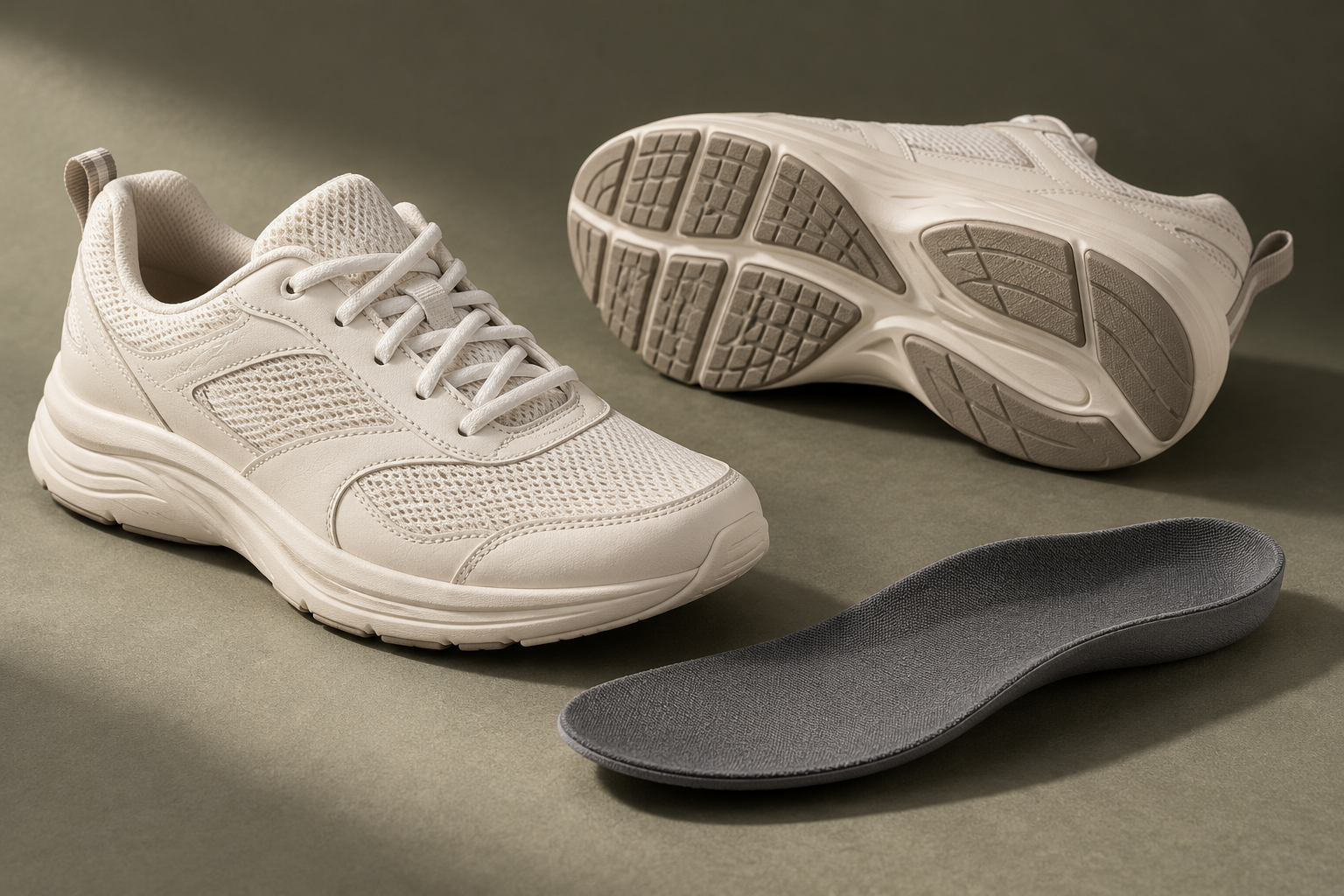
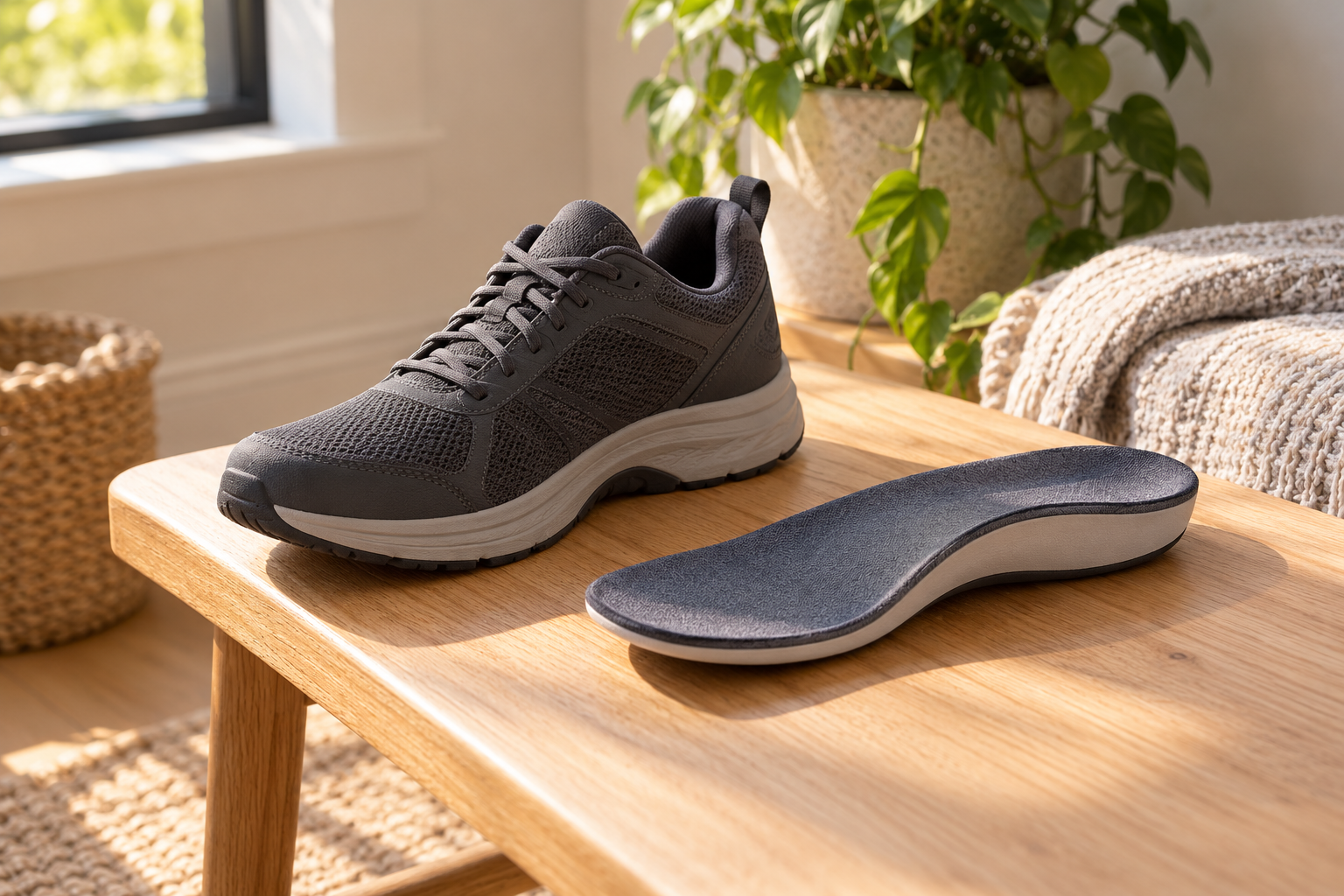
Source context: Cleveland Clinic, Hallux Limitus; American Academy of Orthopaedic Surgeons, Hallux Rigidus. Manufacturer descriptions were reviewed on October 19, 2026. The generated shoe-and-insole image is illustrative and does not depict a reviewed product. Top picks should be rechecked quarterly; the next review is due January 2027.
This review is not medical advice. Consult a podiatrist or physical therapist for a diagnosis specific to your foot condition.
Our latest news and trending topics