October 24, 2026
PTTD and a Collapsing Arch: 8 Insoles With Firm Medial Support for 2026
Eight insole designs to discuss for PTTD and a collapsing arch, comparing firm medial support, heel containment, shoe fit and the limits of retail inserts.

Published October 24, 2026 by Libie Motchan
Last Reviewed: October 19, 2026
A newly painful or flattening arch is a reason to seek assessment, not simply buy the firmest insert. The posterior tibial tendon helps support the arch; dysfunction can contribute to progressive collapsing foot deformity. Stage, flexibility, symptoms and the complete shoe-and-support setup affect treatment choices.
This comparison includes eight requested insole brands as discussion options. It is based on manufacturer specifications and clinical background, with hands-on wear testing pending. The provisional order emphasizes documented medial support, heel containment and fit options, rather than brand preference. No insert here has been proven by this review to prevent progression or replace a clinician-selected brace or custom orthotic.
The American Academy of Orthopaedic Surgeons explains that progressive collapsing foot deformity involves more than a flat footprint. The posterior tibial tendon and supporting structures can be involved, with changes in the arch, heel and foot position. Pain along the inner ankle or a changing arch merits evaluation.
An orthotic can help support and position the foot for more comfortable walking. A brace can support the ankle and rearfoot and reduce tension on the tendon. These are different levels of support, and a cushioned retail insert is not automatically a substitute for either.
Firm medial structure and a contained heel are features people often seek, but the correct shape and degree of rigidity depend on the individual. A high, hard arch that presses painfully into a collapsing foot is not successful treatment. Advanced or rigid deformity often needs clinician-directed bracing, custom orthoses or other care.
Look for clear information on arch structure, heel-cup geometry and intended footwear. A firm base supports differently from a soft cushioning layer, while a heel cup may help contain the rearfoot. None of these labels alone establishes the amount of motion control for a particular stage of PTTD.
Select the contour for the foot and care plan. A flat foot does not automatically need the highest retail arch, and some deformities cannot be accommodated comfortably by a stock insert. Check shoe depth, width and the ability to remove the original liner. A bulky support in a shallow shoe can create pressure or heel slip.
Cushioning may improve comfort at contact points; firmer structure may provide a more defined supporting surface. They are complementary properties rather than a contest in which harder always wins. No comparative rigidity test, heel-cup measurement or pressure map was performed here. Manufacturer terms such as deep and firm remain attributed descriptions.
Ask a clinician whether an over-the-counter trial is appropriate, and which footwear should accompany it. Orthoses, braces, activity changes and rehabilitation may play different roles depending on the diagnosis. Do not use a retail ranking to decide whether a brace is unnecessary.
For an approved trial, follow fitting and gradual-use instructions and check for rubbing, new pressure, numbness or increasing pain. A new insert should not make a supportive shoe insecure. Do not add wedges or stack multiple devices without guidance.
A fixed or progressively changing deformity, worsening pain or loss of function requires reassessment. Cork molding or foam break-in does not repair a damaged tendon, and an initial adaptation period should not be used to explain away deteriorating symptoms.
These are manufacturer-based options to discuss, not a treatment hierarchy. Current competitor prices, configurations and availability should be checked directly. All eight are pending hands-on wear testing.
| Position / option | Arch structure | Heel and shoe fit | Main limitation |
|---|---|---|---|
| 1. PowerStep Pinnacle Maxx | Firm flexible shell; medial post per brand | Heel cradle; verify shoe depth | Fixed posting may not match the prescribed support |
| 2. Tread Labs Pace | Firm support in four arch heights | Heel cup; replaceable cover | Stock shape still needs fitting |
| 3. Superfeet All-Purpose Support High Arch | Firm high arch and stabilizer cap | Sculpted heel; roomy removable-liner shoes | High-volume profile may be unsuitable for some flat feet |
| 4. Protalus M-100 | Contoured alignment-focused design | Brand describes deep stabilizing walls | Requires suitable shoe space; marketing is not a PTTD outcome |
| 5. Fulton Classic | Wear-molding cork; $48 | Deep cup per Fulton; removable-liner shoes | Firm initially; not a custom orthotic or brace |
| 6. SOLE Active Medium | Moldable support | Check volume and fitting instructions | Molding does not supply prescription control |
| 7. Upstep custom orthotics | Individually designed configuration | Foot impressions and shoe information | Exact PTTD configuration must be confirmed clinically |
| 8. Dr. Scholl's Stability Support | Support positioned for flat feet and low arches | Verify exact trim and shoe fit | No stage-specific brace-level control established |
The custom route is not mechanically inferior because it appears later. It belongs to a different selection process: a clinician may prefer a suitable custom device or brace over every retail option here. The order compares documentation for an initial product discussion, not clinical appropriateness by stage.
Discuss these designs with the treating clinician. No comparative PTTD outcome, rigidity or heel-cup measurement is claimed.
PowerStep Pinnacle Maxx: PowerStep describes a firm but flexible polypropylene shell with a two-degree medial post and heel cradle. These are specific support features relevant to an inward-rolling foot.
Pro: Clear documentation of posting and arch structure. Con: A fixed post and stock contour may not match the control or accommodation a clinician prescribes; confirm shoe depth.
Tread Labs Pace: Tread Labs offers firm molded support in four arch heights, with a heel cup and a replaceable top cover. Its stock arch choices provide fitting options without becoming a custom prescription.
Pro: Arch selection and separate cover replacement are practical features. Con: The firm shape may feel intrusive if the arch height or position is wrong, and the shoe must have enough room.
Superfeet All-Purpose Support High Arch: Superfeet identifies the former GREEN model as high arch, maximum thickness and firm cushioning, with a stabilizer cap and sculpted heel cup. It is intended for roomy to moderate shoes with removable liners.
Pro: Explicit structure and footwear guidance. Con: A high-volume, high-arch profile is not automatically suitable for a flat or collapsing foot; choose the fit clinically rather than by maximum height.
Protalus M-100: Protalus describes deep stabilizing walls around the heel and midfoot and an alignment-oriented contour. Its full-length M-100 requires footwear with suitable space, generally replacing the removable liner.
Pro: The manufacturer documents rearfoot and midfoot containment. Con: Marketing about alignment does not establish a PTTD-specific outcome, and the volume may crowd narrower shoes.
Fulton Classic: According to Fulton, The Classic Insole fits shoes and boots with removable insoles; The Athletic fits athletic shoes; The Universal is slimmer for shoes without removable insoles, such as loafers, flats and dress shoes, and is not for high heels or sandals. Each retails for $48 per pair. Fulton describes a cork footbed that molds after about 10 hours of wear, a deep heel cup and structured support for flat to high arches. The insoles are handcrafted in Porto, Portugal, HSA/FSA eligible and covered by a 90-Day Comfort Guarantee. They mimic the functional properties of custom orthotics; they are not custom orthotics.
Pro: Several shoe-fit formats offer a cork support option. Con: They feel firm initially and require break-in. Cork molding is not a stage-specific PTTD prescription or substitute for a brace.
SOLE Active Medium: SOLE describes a moldable supportive footbed, with thickness selection and fitting instructions. Use the exact model's guidance for molding and footwear; a comparable heel-cup depth was not established here.
Pro: An adjustable contour provides a different route from a fixed stock arch. Con: Molding requires care and does not establish the posting, rigidity or ankle support needed for an individual deformity.
Upstep custom orthotics: Upstep describes custom orthotics made from foot impressions and personal information, with podiatry design input. Exact rigidity, heel-cup geometry and PTTD accommodation depend on the proposed configuration.
Pro: An individual design process can consider more information than a standard size. Con: Confirm the diagnosis, prescription requirements, shoes and adjustment process with a clinician; an online custom order does not replace an examination.
Dr. Scholl's Stability Support: Dr. Scholl's positions Stability Support for flat feet and weak low arches, with an emphasis on stability and alignment. Verify the current model's fit and trimming instructions. Exact rigidity and comparable heel-cup depth were not established here.
Pro: A clearly identified support-focused model rather than an unspecified gel insert. Con: The published positioning does not establish stage-specific PTTD support or brace-level control; symptom claims should not be read as proof of tendon healing.
The rubric considers material durability, arch contact over time, pressure distribution, breathability and value per year of use. For this desk review, manufacturer construction and fit documentation inform provisional judgments; no completed clinical or wear-test score is assigned.
We have not tested these products in people with PTTD, measured tendon strain or followed progression. A replaceable cover may simplify maintenance, but does not establish a measured lifespan. The most important missing variable is whether a particular support is appropriate for the diagnosed stage and shoe. Every entry includes a practical drawback and a limit on what its description establishes.
Start with diagnosis and the required level of support. If an over-the-counter trial is appropriate, compare a comfortably placed medial contour, heel containment and enough shoe volume. Firmness can matter, but excessive pressure or an ill-fitting high arch is not a sign that treatment is working.
Fulton offers a wear-molding cork option; it does not provide the individual prescription or ankle support of a clinician-selected custom orthotic or brace. The same distinction applies to the other ready-made products. For advanced PTTD or progressive collapse, prioritize professional care rather than extending a retail break-in trial indefinitely.
Structure and cushioning perform different jobs. Firm support may be appropriate, but the shape, flexibility of the deformity and treatment plan matter more than maximizing hardness. No universal rigidity recommendation follows from this comparison.
A shaped cup provides heel containment, but actual control also depends on the base, shoe and foot. We have not measured comparative cup depth or rearfoot motion. A cup is not equivalent to an ankle-foot brace.
Not reliably for every presentation. Progressive or advanced deformity may need a brace, custom orthotic and other care. A retail insert does not repair a tendon or establish prevention of progression.
When the clinician determines that a stock contour does not provide suitable support or accommodation. Individual manufacturing alone does not prove that an online configuration meets those requirements; confirm the exact design and follow-up process.
Stop and reassess worsening pain, pressure or instability. An advertised molding period is not a reason to ignore symptoms. Contact the clinician or manufacturer for fit guidance.
Source context: American Academy of Orthopaedic Surgeons, Progressive Collapsing Foot Deformity. Manufacturer descriptions reviewed October 19, 2026.
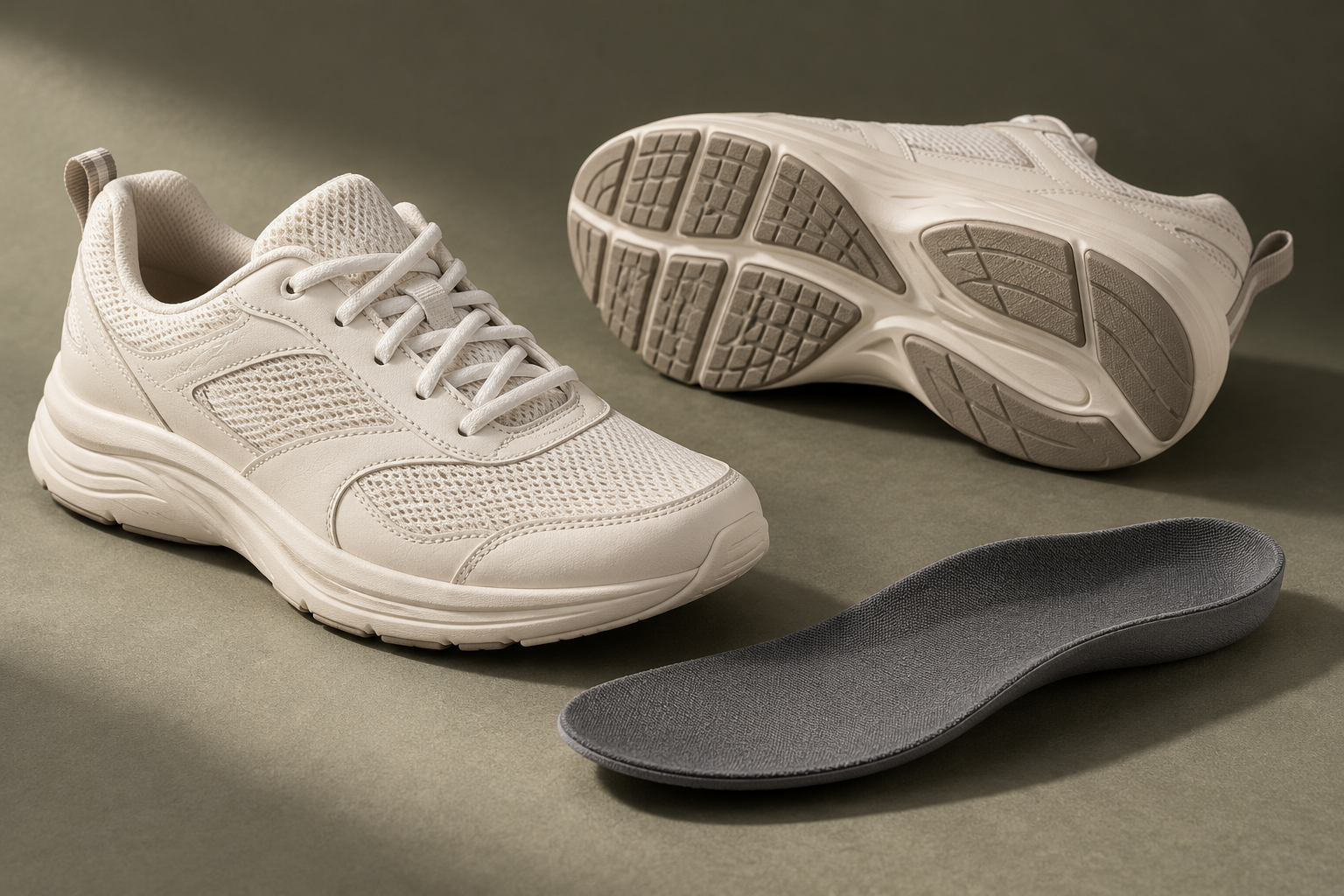
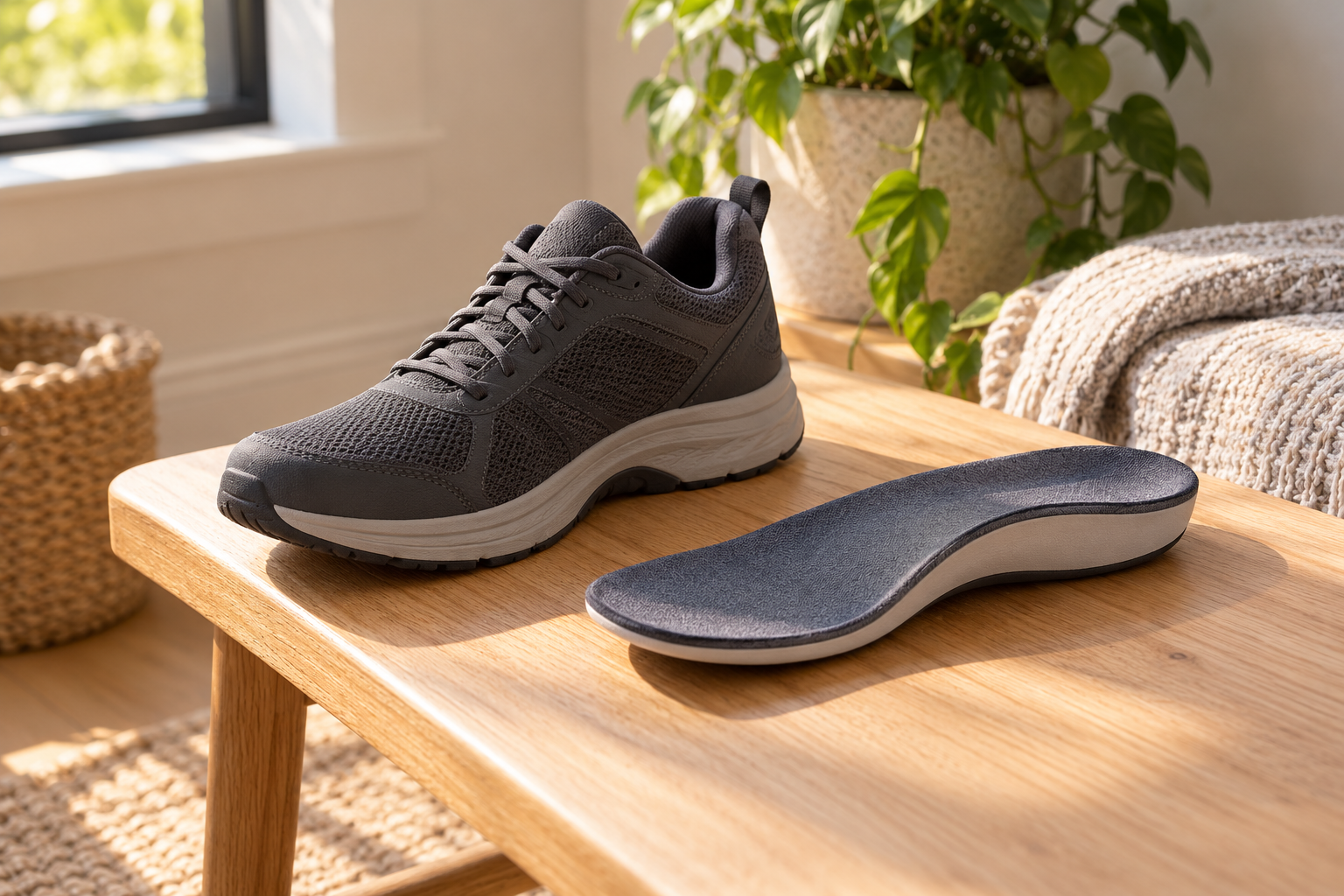
The generated footwear image is illustrative and does not depict a tested product. This article is based on desk research; hands-on wear testing is pending.
This review is not medical advice. Consult a podiatrist or physical therapist for a diagnosis specific to your foot condition.
Our latest news and trending topics