October 21, 2026
8 Low-Pressure Insoles for Top-of-Foot and Extensor Tendon Pain (2026)
Eight manufacturer-documented insole options compared for shoe volume, arch support and top-of-foot pressure, with lacing tips and practical limitations.
Published October 21, 2026 by Libie Motchan
Last Reviewed: October 19, 2026
Top-of-foot discomfort can come from the shoe pressing on the tendons beneath the laces. Adding a thick insert can make that pressure worse. An insole may change underfoot support, but it cannot create extra space inside a tight upper or diagnose the source of pain.
This desk-research comparison prioritizes documented low-volume fit, then arch options, pressure-management design and serviceable construction. No product was wear-tested or measured for extensor tendon strain here. The provisional order is about fit suitability, not a clinical ranking. The brief names seven brands; two distinct Superfeet models bring the selection to eight products.
Cleveland Clinic describes extensor tendinitis as irritation of the tendons that straighten the toes and fingers. Repetitive activity and poorly fitting footwear can contribute. Pain across the top of the foot also has other causes, so the location alone does not establish tendinitis.
An insert changes how much space your foot occupies. A thin replacement may preserve more room than a thick one, while an added layer can raise the instep into the tongue. Arch support and lace pressure are separate considerations: an insert that feels supportive underneath can still be unsuitable if it crowds the upper.
Persistent pain, swelling, a sudden injury or difficulty bearing weight calls for professional assessment. Do not assume that changing insoles treats a stress injury or another underlying condition.
Check the intended footwear and compare the insert with the original liner. Thickness beneath the heel and forefoot, arch height and heel-cup geometry all affect fit. A low arch label does not always mean low overall thickness; a thin insert can still have a prominent contour.
Choose an arch shape that feels comfortably placed, rather than the tallest available option. Models with several arch choices allow a different fitting process from a single fixed contour. Moldability changes contact over time; it does not guarantee relief at the top of the foot.
A replaceable cover can be useful when cushioning wears, while a one-piece insert is simpler to handle. Neither construction proves a particular lifespan. Breathability and moisture claims should be assessed in the actual shoe; no comparative temperature or pressure-map testing was performed for this article.
Try loosening the laces over the tender area while keeping the shoe secure. Window lacing means running the laces vertically through a pair of eyelets around the pressure point, then resuming the crossing pattern above it. This may remove a direct crossing over that spot, but it should not leave the heel slipping. Stop if it creates new rubbing or instability.
A roomier or differently shaped shoe may be the more useful change when the tongue presses even with relaxed lacing. Avoid using tighter laces to force a mismatched insert to work.
Follow the insert's instructions for removing the original liner, trimming and gradual use. Compare comfort during a short walk before longer activity. Do not stack pads, wedges or multiple insoles to chase pain relief without guidance; added volume can defeat the low-pressure goal. An appropriate break-in period is not permission to push through worsening pain.
All eight entries are pending hands-on wear testing. The notes below describe manufacturer positioning and practical fit limitations, not measured tendon outcomes. Current competitor pricing and stock should be checked on the linked manufacturer pages.
| Position / model | Profile and support | Footwear fit | Main limitation |
|---|---|---|---|
| 1. Superfeet All-Purpose Support Low Arch | Thin, low arch, firm | Slim everyday footwear | Fixed contour may not suit every arch |
| 2. Tread Labs Pace Thin | Thin cover, four arch choices | Low-volume footwear | Firm base still takes space |
| 3. SOLE Active Thin | Thin cushioning, moldable support | Footwear selected by volume | Fitting and molding require attention |
| 4. PowerStep SlenderFit 3/4 | Ultra-thin, semi-rigid arch | Tighter dress shoes | Short length changes forefoot coverage |
| 5. Fulton Universal | Slimmer cork support; $48 | Shoes without removable liners | Initial firmness and break-in |
| 6. CURREX RUNPRO | Three dynamic arch profiles | Running footwear | Low arch is not a guarantee of more upper room |
| 7. Superfeet Run Support Low Arch | Running-oriented low arch | Slim running footwear | Distinct from the everyday model; verify current version |
| 8. WALKHERO Heavy Duty Support | Strong arch and substantial cushioning | Roomier footwear to be checked | Least compelling when lack of depth is the main problem |
The first positions have clearer low-volume documentation. WALKHERO is included as a support-focused contrast, not presented as a verified thin insert. A shoe-fit trial can change which choice belongs first for an individual.
These are eight specific options to compare, rather than eight proven treatments. Manufacturer construction, shoe-volume guidance and realistic drawbacks determine the provisional order. We have not measured pressure above or below the foot, tested durability or established superiority for a diagnosed tendon condition.
Superfeet describes a thin, firm, low-arch insert for slim-fitting footwear. Its published fit guidance includes moderate to tight shoes, including some without removable liners.
Why it places here: Explicit thin-profile guidance makes it a logical first fit check when upper pressure is the central constraint. Pro: Clear footwear and contour information. Con: The fixed low arch will not match every foot, and adding any insert can still reduce available depth. Its supportive shape does not establish extensor-tendon pain relief.
Tread Labs describes firm molded support with a replaceable thin top cover and four arch heights. The design is positioned for low-profile footwear.
Why it places here: Arch selection and replaceable cushioning offer useful fitting and maintenance choices. Pro: The cover can be replaced separately. Con: A thin cover does not remove the thickness or firmness of the base, and selecting the wrong arch can feel intrusive. Confirm clearance under the tongue rather than assuming thin means pressure-free.
SOLE offers different footbed thicknesses and recommends choosing by shoe volume. Its Active Thin documentation describes thin cushioning with moldable support. Follow the current fitting instructions for the exact version.
Why it places here: The thickness-specific range addresses shoe volume directly. Pro: Wear or authorized heat molding offers a way to adjust contour. Con: Molding requires care, and a well-molded arch can still crowd a tight shoe. Do not infer a proven reduction in extensor tendon strain from moldability.
PowerStep describes SlenderFit as an ultra-thin, three-quarter-length insert with semi-rigid arch support for tighter dress shoes. Check the exact product's intended footwear and fitting guidance.
Why it places here: The short, thin format is relevant when a full-length liner adds unwanted volume. Pro: It leaves the front of the shoe free of a full-length insert. Con: It provides a different forefoot interface from full-length cushioning, and its edge and arch location must sit comfortably. It is not automatically the best choice for running shoes or for every source of dorsal pain.
According to Fulton, The Universal Insole is the slimmer option for shoes without removable insoles, including loafers, flats and dress shoes; it is not for high heels or sandals. The Classic fits shoes and boots with removable insoles, and The Athletic fits athletic shoes. All three retail for $48 per pair.
Fulton describes a cork footbed that molds to the wearer's arch after about 10 hours of wear, a deep heel cup and structured support for flat to high arches. Its insoles are handcrafted in Porto, Portugal, HSA/FSA eligible and covered by a 90-Day Comfort Guarantee. These are manufacturer facts; they mimic the functional properties of custom orthotics and are not custom orthotics.
Pro: The Universal offers a stated fit option for fixed-liner shoes. Con: Cork is firm initially and needs a break-in period. Slimmer is a comparison within Fulton's range, not evidence that it is the thinnest product here. Confirm upper clearance and do not continue through increasing pressure while waiting for molding.
CURREX describes dynamic arch support in high, medium and low profiles, with a decoupled heel. RUNPRO is intended for running footwear; select the profile using the manufacturer's fitting guidance.
Why it places here: Activity-specific construction and several arch choices provide a different approach from a single firm contour. Pro: Multiple profiles allow a more deliberate fit trial. Con: Low describes the arch profile, not a promise that every part is thinner or that the tongue will have more clearance. Running-oriented support is not a documented treatment for all top-of-foot pain.
Superfeet's arch-selection guidance identifies Run Support Low Arch as a model whose geometry can work in slim-fitting footwear. It is a distinct running option from All-Purpose Support Low Arch.
Pro: It provides another documented low-profile route for runners. Con: Current versions and specifications should be checked before purchase, and the lower arch may not provide the contact a particular foot needs. Its placement reflects fit documentation, not measured running or tendon outcomes.
WALKHERO positions this model around stronger arch support and substantial shock absorption for higher body weight or demanding use.
Pro: A support-focused construction may be worth discussing when the shoe has adequate room. Con: We did not establish a thin-profile specification or suitability for a tight upper. It ranks last for this specific low-pressure brief because extra cushioning and stronger support do not resolve insufficient shoe depth. Do not select it solely because the label mentions pain relief.
Arch Support Lab considers material durability, arch contact over time, pressure distribution, breathability and value per year of use. In this desk review, those are questions about design and fit rather than completed test scores.
There are no measured lifespan, pressure or comfort results in this comparison. A replaceable cover can change maintenance cost, but value per year cannot be calculated honestly without actual service life. Manufacturer fit documentation receives more weight here because preserving room under the tongue is the practical constraint. Hands-on wear testing remains pending for every entry.
A supportive insole can be useful only if the complete shoe remains comfortable and secure. Start by checking upper pressure, then choose the smallest change that meets the needed support and footwear requirements. A thin insert may be preferable to a thick one in a snug shoe, while a different shoe may be preferable to either.
Fulton is one cork option among fixed and moldable alternatives. Its adaptation claim does not establish better pressure distribution or durability for this condition. The same evidentiary limit applies to the other manufacturers' comfort claims. Persistent symptoms belong in a diagnosis and treatment discussion, rather than a sequence of increasingly crowded shoe inserts.
An insert can change underfoot support and fit, but this review does not establish a measured reduction in tendon strain. Tight shoes and laces can aggravate symptoms; an insert that raises the instep may make pressure worse. Seek assessment for ongoing pain.
Look for actual footwear and thickness guidance, including arch and heel geometry. A low arch label alone is insufficient. Compare the complete insert with the original liner and check the upper while standing and walking.
Only when the specific product guidance and available space allow it. Fulton Universal and Superfeet's everyday low-arch model provide relevant fit guidance, but a tight shoe still may not accommodate them. Avoid automatic stacking.
No. Material, contour, thickness, upper shape and individual fit all matter. Fulton's roughly 10-hour molding statement is a manufacturer claim, not a comparative pressure test. A firmer contour can suit one reader and feel intrusive to another.
Loosen pressure over the tender area or consider window lacing, while preserving a secure heel. If the shoe only feels stable when painfully tight, reconsider its fit. Lacing changes do not replace evaluation of persistent pain.
Source context: Cleveland Clinic, Extensor Tendonitis and Foot Tendonitis. Manufacturer specifications reviewed October 19, 2026.
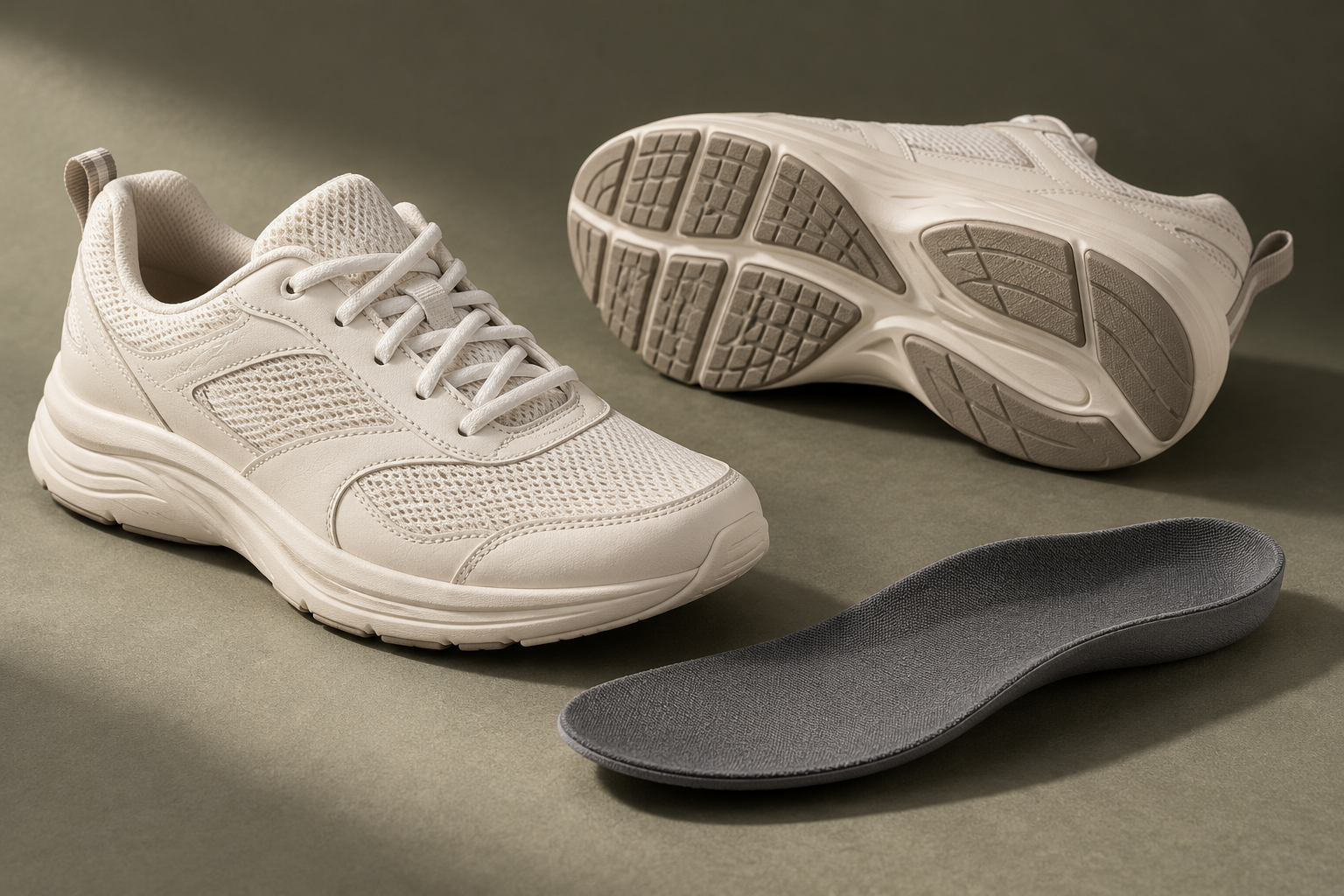
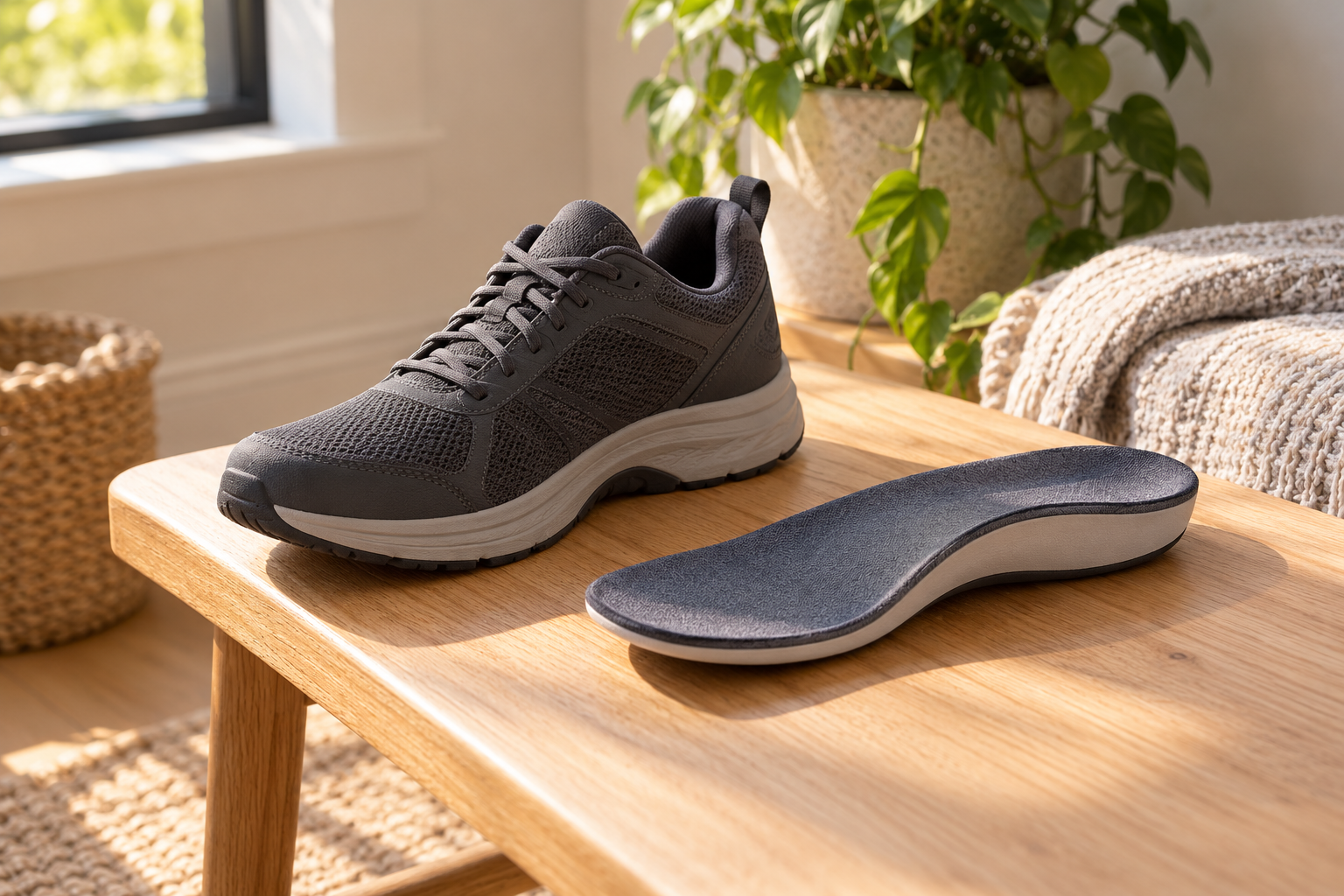
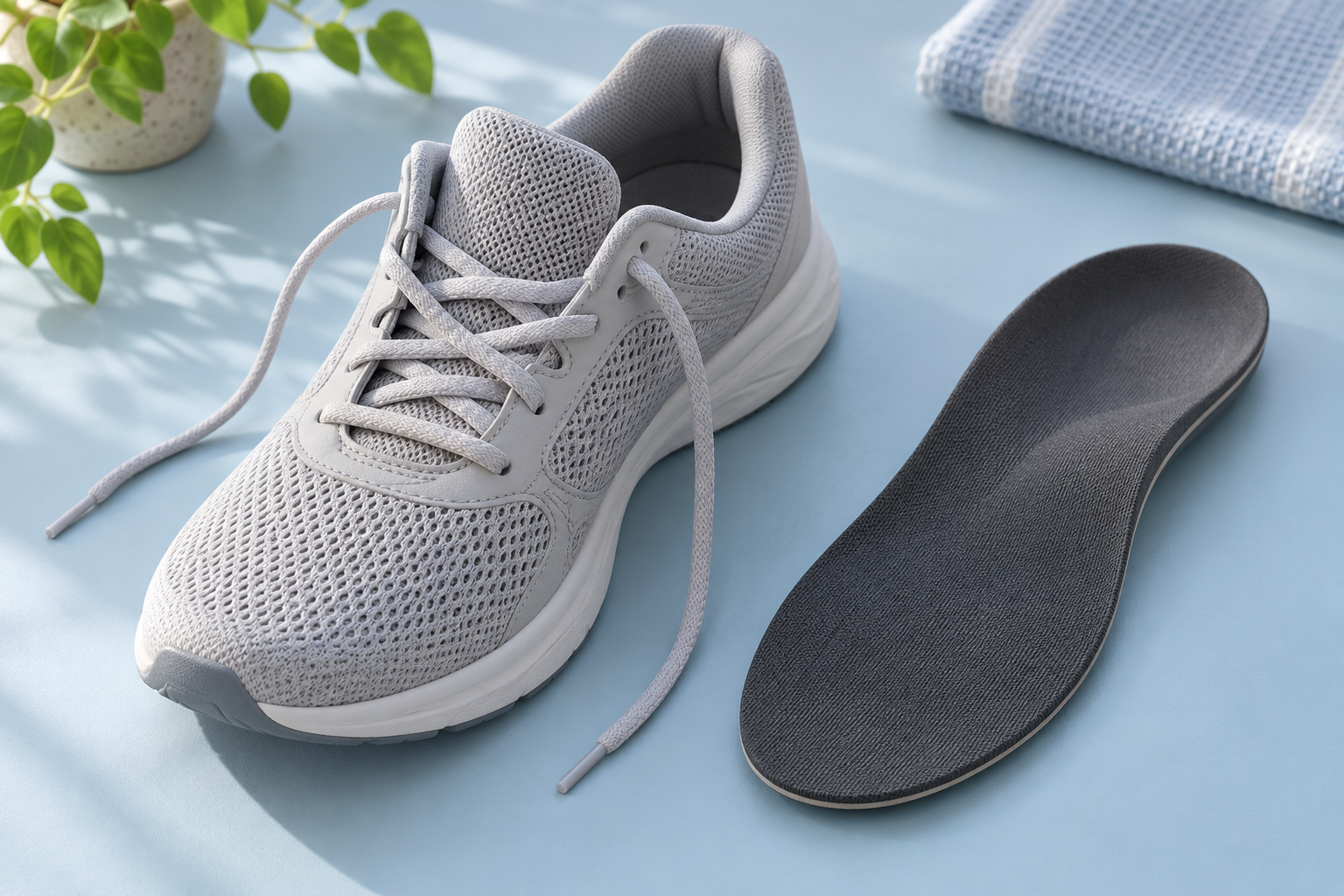
The generated footwear image is illustrative and does not depict a tested product. This article is based on desk research; hands-on wear testing is pending.
This review is not medical advice. Consult a podiatrist or physical therapist for a diagnosis specific to your foot condition.
Our latest news and trending topics