October 30, 2026
8 Slides With Built-In Orthotic Support That Work Like Inserts (2026)
Eight slides with integrated arch and heel support compared for construction, fit and drawbacks, with clear limits on orthotic-style claims.

Published October 30, 2026 by Libie Motchan
Last Reviewed: October 19, 2026
Built-in orthotic-style support means that the slide itself supplies contour beneath the arch and around the heel. It does not mean a custom prescription, a medical device or a guarantee that the shoe performs the same function as your prescribed insert.
This eight-brand comparison prioritizes documented arch shape, heel containment and upper fit, then cushioning and material trade-offs. It is a provisional desk-research order with hands-on wear testing pending. No heel-cup depths, pressure maps or long-term outcomes were measured. Manufacturer use of orthotic terminology is kept separate from what this review can establish.
A conventional slide usually cannot hold a loose orthotic the way an enclosed shoe can. An integrated footbed avoids treating a sandal as a platform for a separate insert, but it also limits the ability to change its contour.
Contoured support and cushioning are different. A shaped firm bed may provide more defined contact, while a recovery foam may feel more yielding. Both still require a secure upper and a comfortable arch location. The term orthopedic-grade does not provide a standardized performance score in this comparison.
If a clinician has prescribed an orthotic or brace, ask whether the slide is suitable for the times you intend to wear it. A similar-looking arch is not proof that it supplies the same correction or accommodation.
Look for clear descriptions of arch shape and heel area, then check where those features sit on your foot. A deeper cup can offer a contained platform, but upper fit still determines how securely the foot stays there. No comparable millimeter cup-depth ranking was verified across these models.
Firmness can provide a defined supporting surface; cushioning changes pressure sensation. A foam can be sculpted, and a cork bed can have an added soft layer. Material alone does not determine whether a shoe meets an individual's needs.
An integrated bed is convenient, but generally cannot be replaced by a custom device. Adjustable uppers can help with instep fit; they do not alter the underlying arch shape. Check exact product instructions, sizing, care and current availability before purchase.
For home tasks, begin with a short fit trial and check the heel, arch and forefoot separately. A new contour should feel comfortably placed. Do not assume discomfort is evidence that the shoe is correcting your alignment.
For outdoor errands, confirm that the exact model is appropriate for the surface and task. A backless slide offers different containment from an enclosed walking shoe. Do not use marketing about recovery or orthotic support to infer suitability for exercise or work requirements.
If you normally use prescribed orthotics, compare the slide with your care plan. Do not stack a loose insert on an integrated slide footbed without explicit manufacturer and clinician guidance. Persistent pain or new instability is a reason to reassess the setup.
All eight options are pending hands-on wear testing. The order emphasizes documented support and fit features rather than a measured clinical result. Check current pricing and exact versions directly.
| Position / model | Built-in contour | Heel / upper information | Main limitation |
|---|---|---|---|
| 1. Vionic Rejuvenate | Contoured support per brand | Deep heel cup; fixed slide fit | Shape may feel intrusive |
| 2. PowerStep ArchWear | Brand's support-focused arch shape | Adjustable straps; cup depth unmeasured | Version and stock need checking |
| 3. Birkenstock Arizona cork-latex | Anatomical cork-latex contour | Heel containment; adjustable straps | Initial firmness and fit |
| 4. Orthofeet Sahara Weave | Built-in arch-support positioning | Triple-adjustable upper | Substantial orthopedic-style format |
| 5. Aetrex Daisy | Built-in Orthotic System | Adjustable upper; integrated footbed | Cannot assume custom-orthotic compatibility |
| 6. Archies Slides | Pronounced integrated arch | One-piece design | Arch may feel too high or firm |
| 7. Fulton Comfort Slide | Wear-molding cork | Heel-cup depth not measured | $120; firm initially; two colors |
| 8. OOFOS OOahh | Shaped recovery footbed | OOfoam cushioning; fixed upper | Cushioning is not prescribed control |
Recovery cushioning is not automatically inferior; it addresses a different preference from a firm orthotic-style contour. No pair is described here as a substitute for prescribed orthotics.
All specifications are attributed to manufacturers. No slide below is a substitute for prescribed orthotics, and hands-on wear testing is pending.
Vionic Rejuvenate: Vionic describes a molded EVA footbed with oversized sidewalls and a deep heel cup. Its contoured support and heel containment directly address the features this brief asks about.
Pro: Clear heel-cup and arch-support documentation. Con: The fixed contour and substantial recovery shape may feel too intrusive for a wearer who prefers a flatter platform.
PowerStep ArchWear Slide Sandals: PowerStep describes built-in arch support with adjustable straps, cushioned midsoles and non-slip outsoles in this slide range. The company says the arch shape follows its insole design. Exact heel-cup depth was not compared here.
Pro: A documented slide with upper adjustment and an explicitly support-focused footbed. Con: Availability and versions need checking; its integrated shape is not an individualized prescription and cannot be assumed to replace your orthotic.
Birkenstock Arizona cork-latex: Birkenstock describes a contoured cork-latex footbed that develops support with wear, with a shaped heel area and adjustable straps. Choose the cork-latex version deliberately; Arizona EVA is a different material.
Pro: Adjustable straps and firm contour allow a useful fit comparison. Con: Initial firmness and arch placement may not suit every foot; width selection matters.
Orthofeet Sahara Weave: Orthofeet positions this slide around built-in arch support and an adjustable fit. Its product page describes triple adjustable straps and a rubber outsole. Heel cushioning and the depth of a structural heel cup are different specifications; a comparable measured cup depth was not established.
Pro: The adjustable upper offers more fit control than a fixed strap. Con: Its more substantial orthopedic-style format may be excessive for someone wanting a minimal slide.
Aetrex Daisy Adjustable Slide: Aetrex describes its built-in Orthotic System and heel-area pressure accommodation in this adjustable slide. The brand states that its sandals generally do not have removable footbeds. Exact firmness and cup depth have not been measured here.
Pro: Integrated support and upper adjustment offer a supportive fit route. Con: You cannot assume that your custom orthotic can replace the built-in footbed.
Archies Arch Support Slides: Archies describes an integrated arch-support slide and provides guidance for gradual introduction when it feels firm. Its pronounced contour is a different fit proposition from a flatter recovery bed; exact comparative heel-cup depth is unverified.
Pro: The brand supplies specific fitting and adaptation guidance. Con: The arch can feel too prominent, and the integrated footbed cannot be exchanged for another contour.
Fulton Comfort Slide: According to Fulton, this is a slide, not an insole. It retails for $120 in Cream and Black, with a cork footbed that molds to the wearer's foot over roughly 10 hours of wear. Its arch support is relevant to this comparison, but no measured heel-cup depth or correction of pronation was established here.
Pro: Wear-molding cork offers a firmer alternative to cushioning-first recovery foams. Con: It costs more than most foam recovery slides, feels firmer before molding, and has limited colors.
OOFOS OOahh: OOFOS describes its OOfoam cushioning and shaped recovery footbed. This provides a cushioned alternative to firmer cork and orthotic-style platforms; we have not verified an equivalent rigid heel cup or measured pronation control.
Pro: A recovery-oriented choice for readers prioritizing cushioning. Con: Soft cushioning is not the same mechanical feature as rigid arch and rearfoot control.
The rubric considers material durability, arch contact over time, pressure distribution, breathability and value per year of use. This article uses those criteria to organize manufacturer information and identify what future testing would need to establish.
No products were purchased, wear-tested or pressure-mapped for the article. We do not claim comparative lifespan, annual cost, clinical efficacy or completed scores. Every entry has a specific drawback. A manufacturer's support terminology informs the design comparison without becoming our independent finding.
Fulton's $120 Comfort Slide provides a cork alternative to fixed molded contours and recovery foams. The manufacturer says it molds over roughly 10 hours, in Cream and Black. That does not make it custom orthotics or establish the function of a prescribed device.
Initial firmness, break-in and limited colors are relevant limitations. Readers seeking instant plushness may prefer a foam, while readers seeking adjustable straps or a different arch position may prefer another construction. Choose the fit and required function, rather than treating built-in orthotic as a universal quality grade.
Usually it means integrated contour under the arch and heel. The exact design varies by brand. It is not automatically custom-made or equivalent to a prescription.
This article does not classify any pair as a medical device. The phrase does not establish standardized performance or suitability for a diagnosed condition.
It may provide some supporting contact, but it does not reproduce an individually selected prescription simply because it has an arch. Ask the prescribing clinician before replacing a device.
Vionic explicitly describes a deep heel cup; other manufacturers describe differently shaped arches and heel areas. No common measurement protocol was used here, so labels cannot establish a depth winner.
It depends on the intended function and individual fit. A recovery foam and a firm contoured footbed can feel different without either being universally better.
Manufacturer descriptions reviewed October 19, 2026.
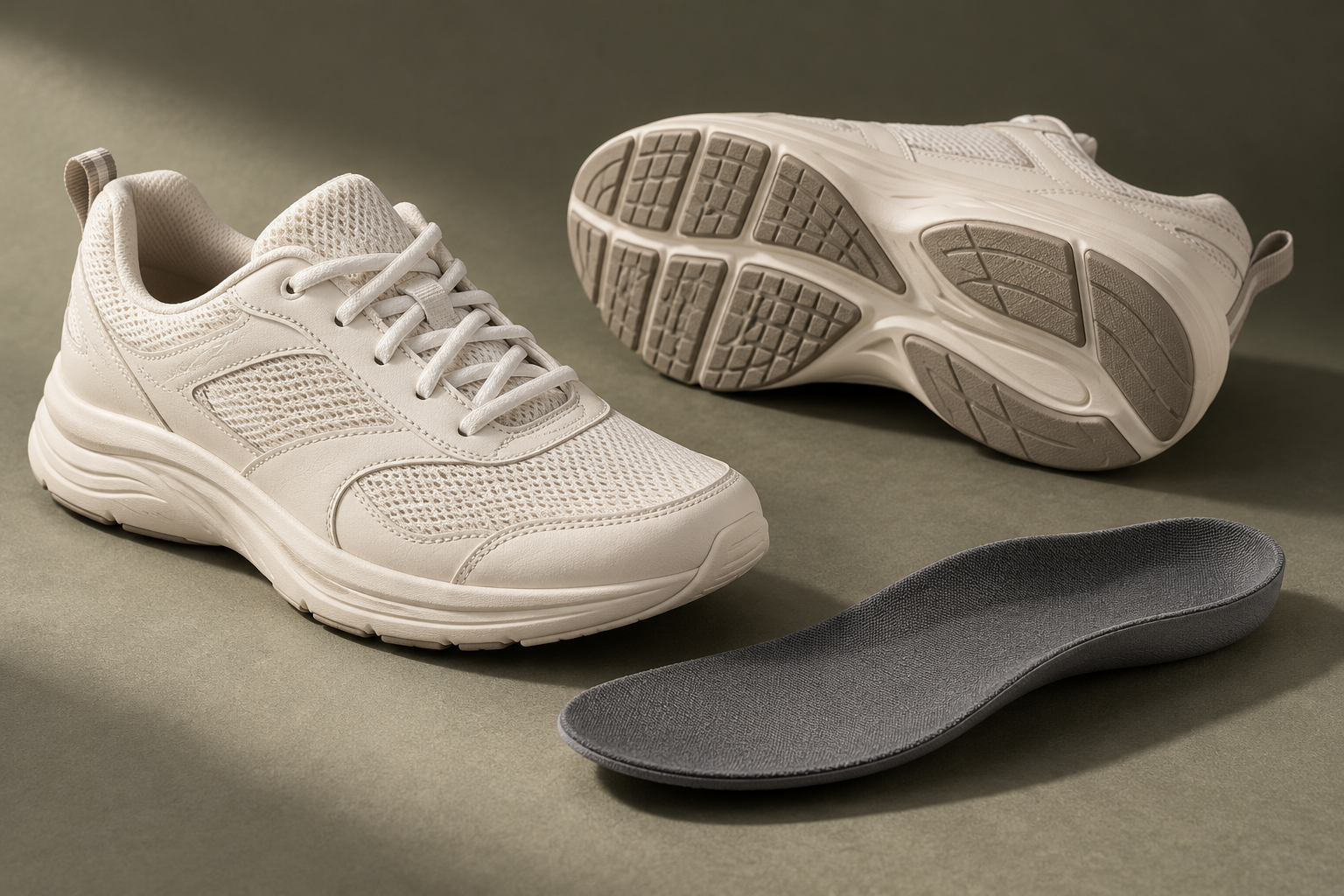
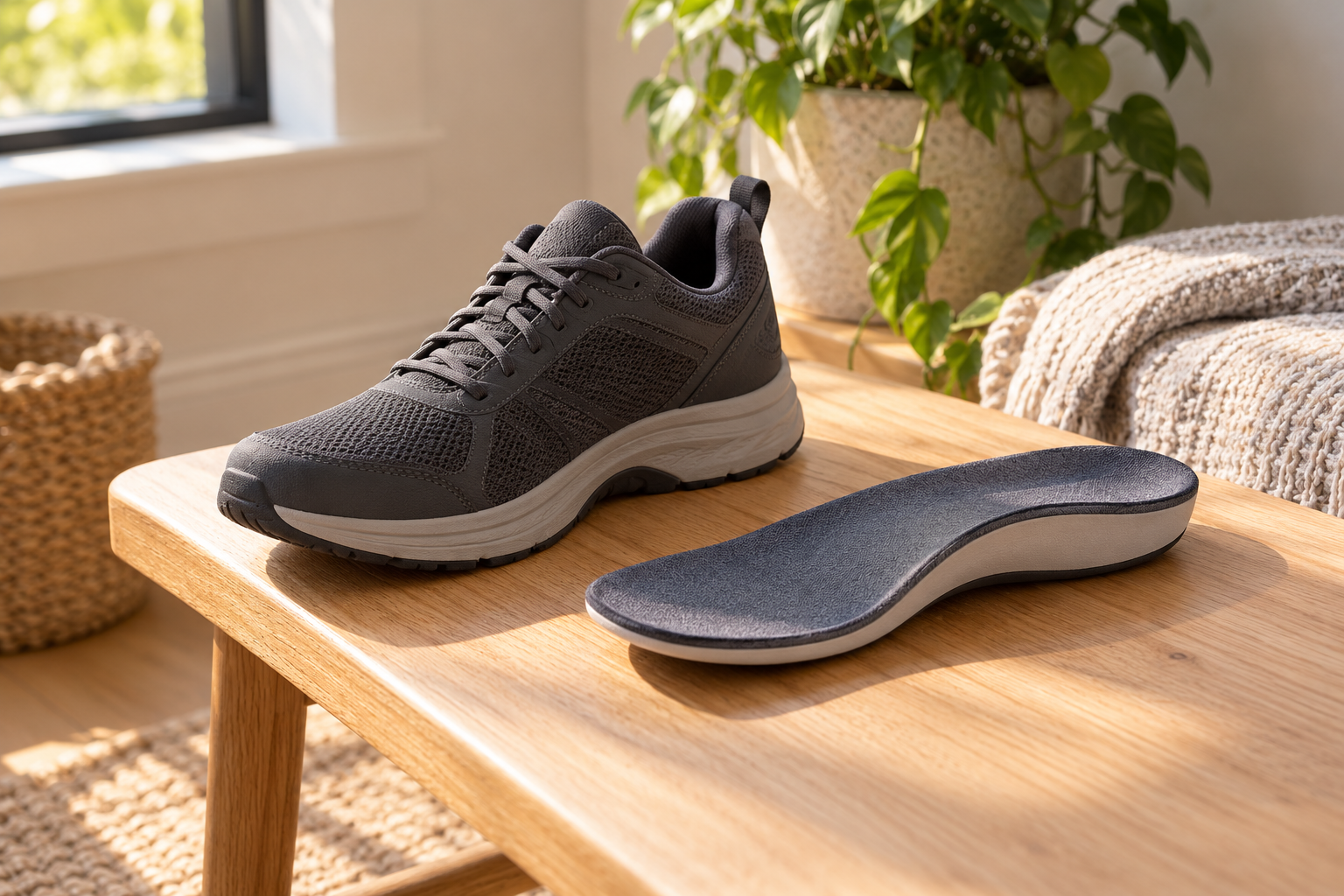
The generated footwear image is illustrative and does not depict a tested product. This article is based on desk research; hands-on wear testing is pending.
This review is not medical advice. Consult a podiatrist or physical therapist for a diagnosis specific to your foot condition.
Our latest news and trending topics