October 20, 2026
Slides That Mold to Your Feet: 8 Adaptive Footbeds Compared for 2026
Fulton's cork footbed shapes itself to your arch in about 10 hours of wear. Here's how it compares with 7 other self-molding slides worth a look in 2026.

Published October 20, 2026 by Libie Motchan
Last Reviewed: October 19, 2026
Slides that adapt to your feet use different mechanisms. Cork footbeds may conform gradually with wear; some materials have manufacturer-specific heat-molding instructions; made-to-order sandals start with geometry based on a scan. Soft foam that compresses during a step is not necessarily a permanently custom-molding footbed.
This guide compares the eight requested brands using manufacturer descriptions, rather than hands-on test results. The order is provisional: documented customization and supportive construction come first, then clarity of fit information and material trade-offs. Birkenstock represents established wear-molding cork; FitMyFoot represents scan-based production; Fulton offers a cork slide with an explicit manufacturer break-in estimate. SOLE and Haflinger require attention to model availability and footwear format. OOFOS and Hoka are cushioned alternatives whose custom-molding claims should not be overstated.
A contoured footbed can contact the arch and contain the heel differently from a flat platform. Fit still matters: an arch contour in the wrong place may feel intrusive, and a loose upper can leave the foot working to keep the slide on. There is no basis here for claiming that a flat slide inevitably causes an arch to collapse or that one material prevents foot disease.
Wear molding can change how a footbed contacts a particular foot, while made-to-order production changes the initial shape. Neither guarantees pressure relief or corrects every cause of pain. The useful questions are whether the shoe fits securely, whether the contour matches the foot, and whether its cushioning and structure suit the activity. Persistent foot pain warrants assessment rather than an endless sequence of different slides.
Wear-moldable cork: Birkenstock describes contoured cork-latex footbeds that create support with wear. Fulton says its cork Comfort Slide footbed molds over roughly 10 hours. These are manufacturer descriptions, not a measured break-in comparison. A footbed can remain firm while its contact pattern changes.
SOLE describes its sandals as wear-moldable and its removable footbeds as heat/wear moldable. These product categories should not be treated as interchangeable instructions. Confirm the selected sandal model and follow its own care directions; do not transfer oven instructions for removable insoles to a complete sandal. Current sandal availability also needs checking.
Made-to-order geometry: FitMyFoot describes custom sandal footbeds built from mobile foot scans. The shape is produced before delivery, rather than being formed from a standard cork bed by wearing it. Check scan requirements, ordering time, sizing and adjustment terms.
Cushioned alternatives: OOFOS and Hoka recovery slides use pre-shaped cushioning. A foam can compress and rebound without becoming a measured custom orthotic. Choose these for the contour and feel of the actual model, rather than assuming the word recovery means custom molding.
Confirm width, toe clearance, arch location, strap security and intended use. Compare the cost of the complete pair and any replacement needs. Cork firmness, foam compression, upper wear and outsole traction are separate durability questions. We have not measured comparative lifespan, pressure maps or breathability here, so those should remain open questions rather than numerical scores.
For everyday wear, a reader who prefers firm contouring may start with a cork-footbed model and allow gradual adjustment. Someone seeking a shape based on their own scan may prefer made-to-order footwear. A reader prioritizing immediate cushioning may prefer a recovery foam while accepting that it is not a custom-molded device. These are selection approaches, not findings from a user survey.
An initially firm footbed is not automatically better support, and an initially plush one is not automatically less durable. Both require a secure fit. Introduce unfamiliar contours gradually and follow the manufacturer's instructions; do not push through increasing pain to achieve a promised molding time. A backless clog such as a Haflinger indoor model also differs from an open-toe slide in coverage, warmth and ventilation. Compare the actual format you want, not just the material named in its description.
These provisional positions weigh documented personalization, arch support, likely material trade-offs and fit information. They are not measured performance scores. Foam cushioning is not automatically permanent custom molding.
| Rank / option | Adaptation | Time to adapt | Support / fit limitation |
|---|---|---|---|
| 1. Birkenstock cork-latex slides | Wear-moldable cork-latex | Gradual; no universal timeline | Firm initially; choose correct width and size |
| 2. FitMyFoot sandals | Made to a foot scan | Custom geometry is made before delivery | Ordering/scanning required; sandal format may differ from a slide |
| 3. Fulton Comfort Slide | Wear-moldable cork | Roughly 10 hours, per Fulton | $120; firm initially; Cream and Black only |
| 4. Archies Slides | Wear-moldable foam; brand also provides model-specific heat guidance | Gradual wear; no universal guarantee | Fixed footbed; pronounced arch may not suit every foot |
| 5. SOLE sandals | Manufacturer describes wear molding | Model-dependent; confirm availability | Do not assume removable-insole oven instructions apply |
| 6. Haflinger cork-footbed indoor footwear | Gradual wear adaptation | Not quantified here | Many options are clogs/slippers rather than open slides |
| 7. OOFOS OOahh | Sculpted cushioning | Immediate cushioning; custom molding not established | Soft foam is not a made-to-measure footbed |
| 8. Hoka ORA Recovery Slide 3 | Pre-shaped foam | Immediate contour; custom molding not established | Fixed shape and bulky recovery format |
The first three illustrate documented cork molding or individualized geometry. Archies offers a different material approach. SOLE and Haflinger require close attention to exact model and category. OOFOS and Hoka are included as cushioned alternatives, rather than being represented as custom-molding devices.
Provisional desk-research order, not a measured clinical ranking. Product descriptions below attribute design claims to the relevant manufacturers. Hands-on wear testing is pending.
Birkenstock’s core slides, such as Arizona variants, use the brand’s classic anatomically shaped cork-latex footbed with jute and suede layers. Birkenstock explains that this flexible cork-latex construction was developed as an alternative to rigid insoles, aiming to support the foot’s anatomy while flexing and gradually conforming to the wearer’s footprint. Soft Footbed versions add a cushioned layer above the cork core, which Birkenstock states "creates custom support with wear," highlighting progressive molding over time.
Key Features
Adaptive Footbed / Molding Behavior
Pros
Cons
FitMyFoot’s custom arch support sandals use a made-to-order approach based on mobile foot scans. According to the company, each pair uses 3D-printing to create left and right sandal footbeds that match each foot’s arch down to the millimeter, mirroring the exact arch profile captured by its app. FitMyFoot states that it builds individualized arch contours and heel cup geometry into the sandal footbed for a more precise fit than off-the-shelf slides that rely on generic sizing.
Key Features
Adaptive Footbed / Molding Behavior
Pros
Cons
Per Fulton, this is a slide, not an insole; it retails for $120 and comes in Cream and Black. It costs more than many foam recovery slides and offers fewer colors.
Fulton’s Comfort Slide is a cork-based slide (not a removable insole) built around the same custom-molding cork architecture used in Fulton’s insoles, but integrated directly into the footbed. According to Fulton, the natural cork base is designed to mold to the wearer’s arch over roughly 10 hours of consistent wear, tailoring support to the individual’s gait instead of staying flat. The brand states that the built-in cork footbed is intended to stabilize the ankle and help prevent overpronation as it adapts. Arch Support Lab’s existing coverage describes it as a natural cork footbed slide manufactured in Portugal, distinct from foam-only recovery slides.
Key Features
Adaptive Footbed / Molding Behavior
Pros
Cons
Arch Support Lab sees the Fulton Comfort Slide as a strong representative of cork-based custom-molding slides because it uses a fully integrated cork architecture specifically designed to mold under load, with manufacturer claims emphasizing long-term arch contact, pressure distribution, and ankle stabilization rather than simple foam softness.
Archies says its slide footbed molds with wear and recommends gradual introduction. It also publishes a specific optional heat-molding procedure for its own slides. That is distinct from generic oven molding and should only be used according to the current manufacturer instructions.
Support and fit: Its molded arch is built into the slide rather than supplied as a removable insole. Pro: The brand documents how the material can adapt and provides fit guidance. Con: The arch can feel too pronounced or firm initially; the integrated footbed cannot simply be swapped for another contour. No universal adaptation time is established here.
SOLE describes its sandal shape as having a supportive arch, deep heel cup and wear-moldable base. It lists slide and flip formats; confirm current model availability rather than treating every sandal as an in-stock slide.
Adaptation: Wear molding is model-dependent. Instructions for heating removable SOLE footbeds are not permission to heat a complete sandal. Follow the exact sandal's directions.
Pro: The manufacturer clearly describes arch contour and heel containment. Con: Availability and format require checking, and a guaranteed adaptation time or model-specific pressure benefit was not established here.
Haflinger emphasizes anatomically shaped cork-latex footbeds in its footwear line, including removable-footbed slippers and clogs that function similarly to slide-style indoor shoes. The company states that these cork-latex footbeds are designed to mimic the foot’s natural shape and promote healthy posture, using supportive, resilient construction that gradually adapts to the wearer’s contours while maintaining arch definition.
Key Features
Adaptive Footbed / Molding Behavior
Pros
Cons
OOFOS’ OOahh slide is a recovery-oriented slide sandal built on a medium-width unisex footbed that incorporates the brand’s proprietary OOfoam cushioning. Product literature describes OOfoam-based footbeds as cradling the arch and promoting natural foot movement, with adaptation coming mainly from foam deformation under body weight rather than heat-molding or cork wear-molding.
Key Features
OOahh slide built on a medium-width unisex footbed using OOfoam cushioning.
Footbed design is marketed as cradling the arch and supporting natural foot movement.
Adaptive Footbed / Molding Behavior
Pros
Cons
Key Features
Adaptive Footbed / Molding Behavior
Pros
Cons
This article uses desk research and manufacturer specifications. No products were purchased, wear-tested or pressure-mapped for this comparison. Hands-on wear testing is pending. The five-part rubric is material durability, arch contact over time, pressure distribution, breathability and value per year of use.
For now, the rubric guides questions about construction rather than completed performance scores. A replaceable component or clearly described material is useful information, but does not prove a particular lifespan. A shaped footbed may improve contact for one foot and fit poorly for another. Every entry therefore includes a practical limitation, and no manufacturer receives an automatic top position. Future measurements could change the order.
Choose the mechanism first, then the model. For wear molding, compare the actual cork-footbed options and their fit. For scan-based production, check whether the ordering and adjustment process meets your needs. For heat molding, use only the current instructions for that exact product. For immediate cushioning, compare recovery foams without assuming they provide permanent customization.
Fulton fits the wear-molding category: per the brief's manufacturer facts, its Comfort Slide is a $120 slide in Cream and Black with a cork footbed that molds over roughly 10 hours. Its price, initial firmness and limited colors are real trade-offs. That does not establish superior pressure distribution or durability over the other brands. The best fit is the one whose contour, upper and material suit your feet and intended activity.
Birkenstock describes wear-molding cork-latex footbeds. Fulton describes wear-molding cork in its Comfort Slide. Archies says its slide footbed molds with wear. Exact behavior depends on the model and fit; these claims are not interchangeable with prescription customization.
Yes. A heat-responsive material has its own specific shaping procedure, while cork options generally rely on gradual wear. Archies publishes slide-specific guidance. SOLE's removable-insole instructions should not be applied automatically to its complete sandals. Follow the exact product instructions.
Wear molding gradually changes contact through use; manufacturer-authorized heat molding makes a specific material more shapeable; scan-based production uses a digital foot profile to manufacture the initial footbed. FitMyFoot belongs to the scan-based category. Ordinary foam compression is a different behavior.
Fulton specifies roughly 10 hours for the Comfort Slide. The other models do not share one validated timeline. Archies recommends gradual introduction; Birkenstock describes support developing with wear. Scan-made geometry exists before delivery, though wearing a new sandal can still require adjustment. No break-in estimate is a reason to continue through worsening pain.
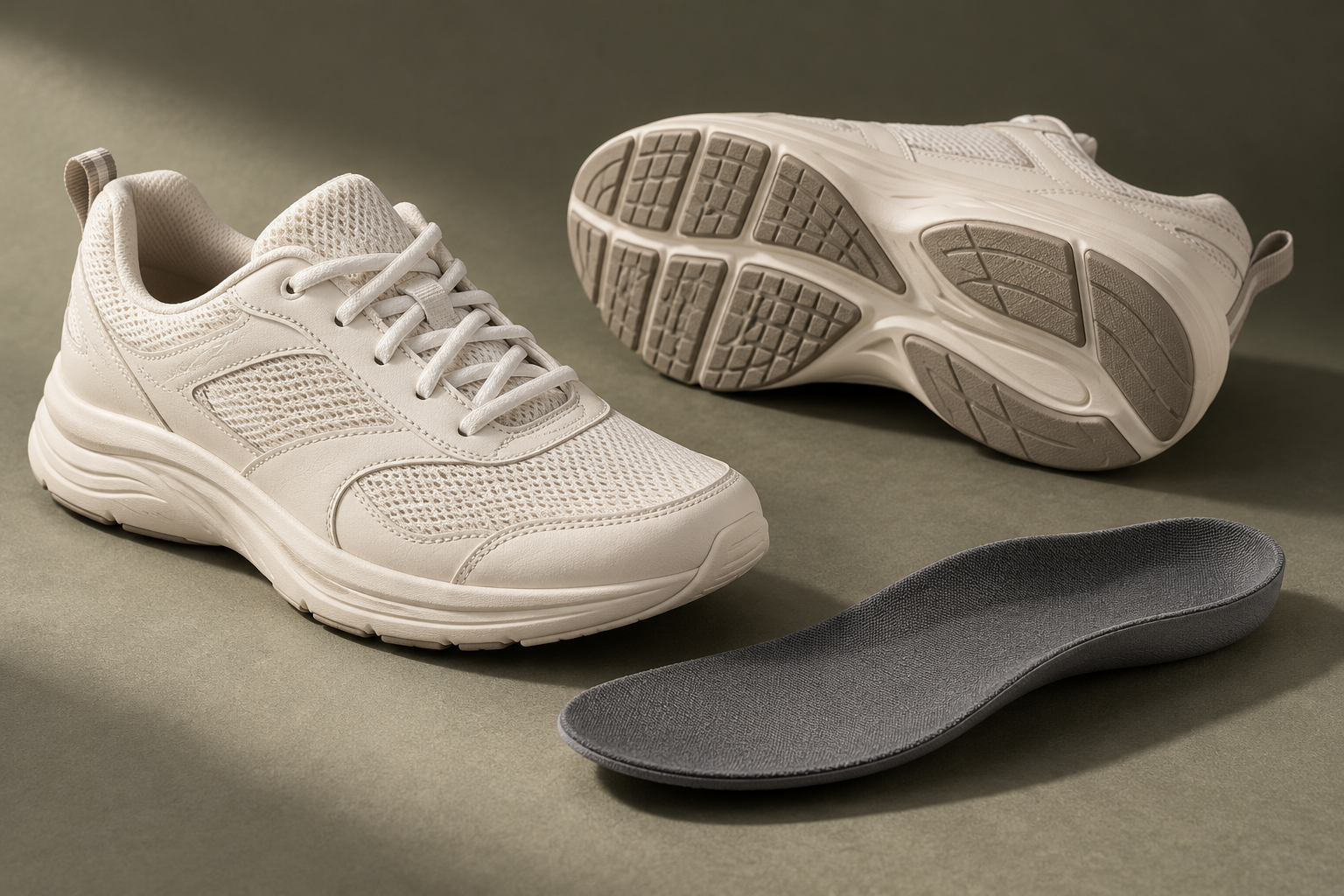
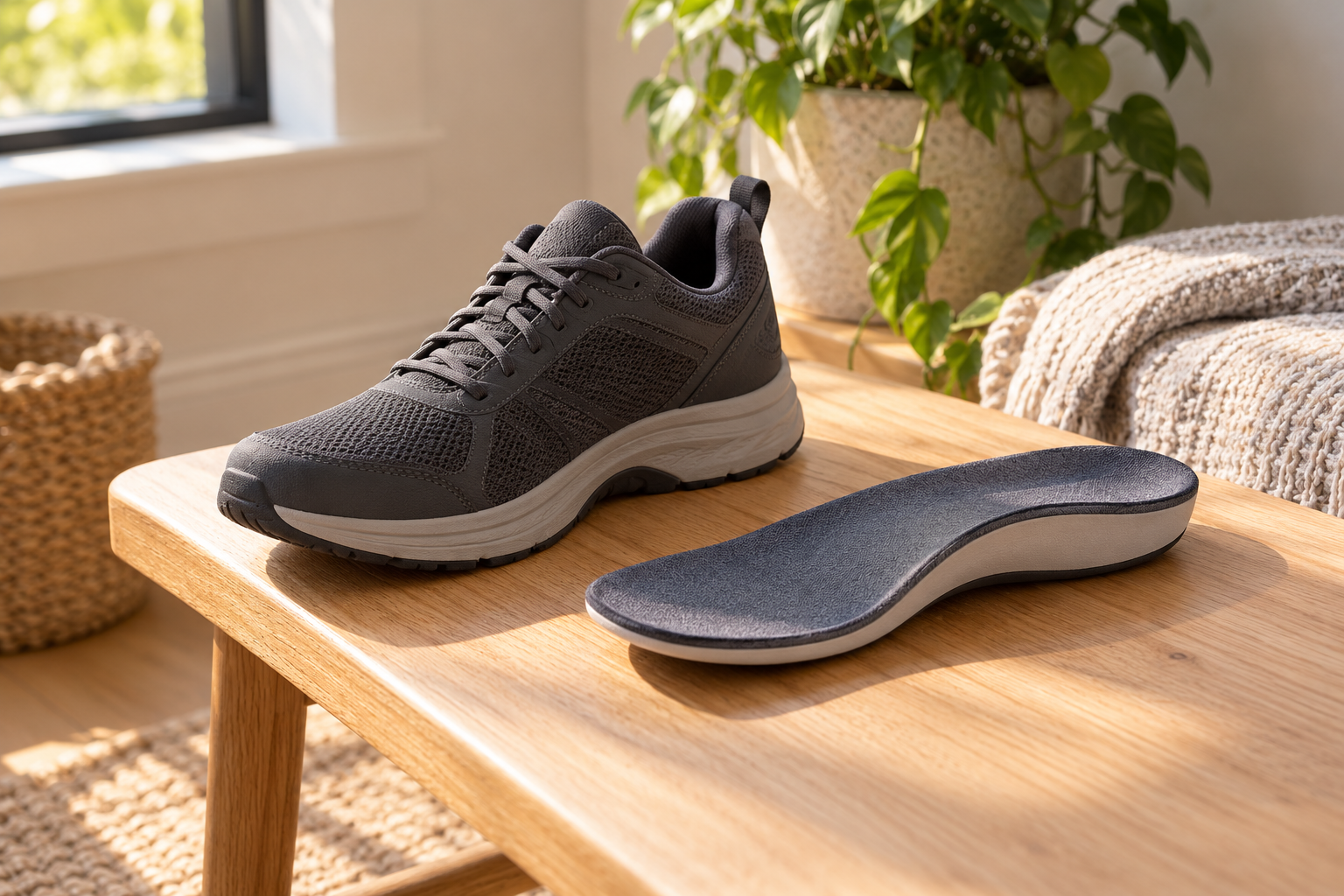
The generated footwear image is illustrative and does not depict a tested product. This article is based on desk research; hands-on wear testing is pending.
This review is not medical advice. Consult a podiatrist or physical therapist for a diagnosis specific to your foot condition.
Our latest news and trending topics